
Chimpanzees May Have Their Own Social “Language Rules” " And They Learn Them From Adults
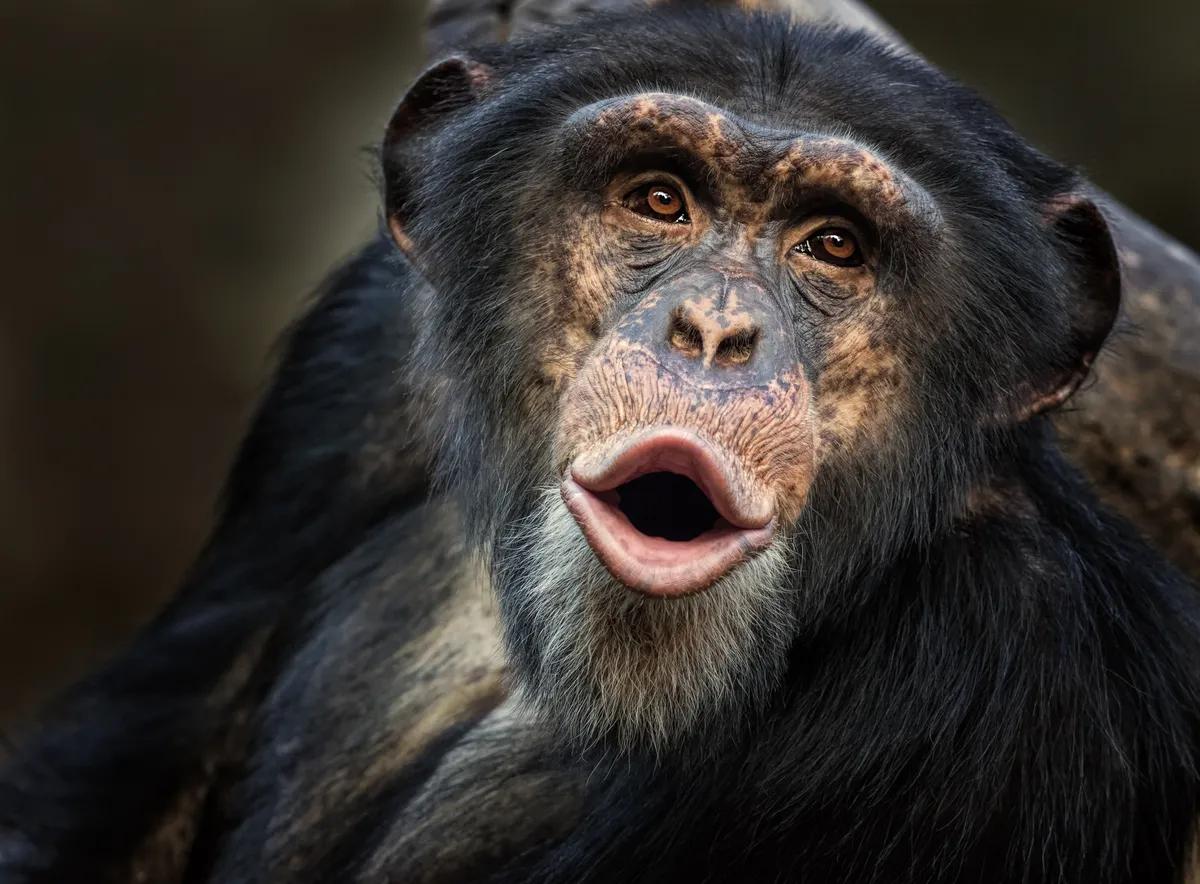
A chimpanzee makes a short, unusual sound while grooming another member of its group. It is not quite a call, a grunt or a conventional word. The sound resembles someone blowing a raspberry with their lips.
What makes this noise interesting is not simply how it sounds, but when it is used.
Researchers have discovered that wild chimpanzees in different social groups tend to use this particular vocalisation in a specific situation: while grooming one another. Young chimpanzees raised without adult role models, however, use it across a much wider range of interactions.
When an adult chimpanzee was introduced to one of these younger groups, the youngsters gradually began using the sound in a more consistent way.
The findings, published in the Proceedings of the National Academy of Sciences (PNAS) on November 9, 2026, suggest that chimpanzees can learn the social function of certain calls from other members of their community.
The discovery challenges the long-standing assumption that great ape vocal communication is almost entirely fixed by biology. It also raises an important question: how much of the ability to communicate through socially shared signals existed before human language emerged?
A Sound That Carries More Meaning Than It First Appears
The researchers focused on an unvoiced chimpanzee vocalisation known as a raspberry.
It is produced through movements of the lips and resembles the familiar human gesture of blowing air through the lips to make a playful sound. Although the noise itself is relatively simple, its use within a social group may be more meaningful.
Human languages depend on conventions. The word used for an object is not necessarily connected to the object’s physical characteristics. English speakers say “dog,” while French speakers say “chien.” People learn which sounds to use by growing up within a particular language community.
Scientists have traditionally considered chimpanzee calls much less flexible. Their vocal repertoire was generally thought to be largely inherited, with sounds tied closely to biological or emotional states.
The new study examines a different possibility: a call may be biologically available to an animal, while the circumstances in which it is used are learned socially.
That distinction is important. It means that learning communication does not necessarily require learning an entirely new sound. An animal may already be capable of producing a call but acquire its social function through interaction with others.
Researchers Compared 91 Chimpanzees
The team, led by researchers associated with the CNRS Institute of Cognitive Sciences in Lyon and the Taï Chimpanzee Project, collected audio and behavioural observations from 91 chimpanzees ranging in age from newborns to 55-year-old adults.
The animals belonged to eight groups.
Four were wild communities living in Taï National Park in Côte d’Ivoire. The other four consisted of orphaned chimpanzees raised alongside peers at Tacugama Chimpanzee Sanctuary in Sierra Leone.
The difference between the two settings was central to the research.
Wild chimpanzees grow up within established social communities, where they can observe and interact with older individuals. The orphaned chimpanzees at the sanctuary had grown up without the same kind of consistent adult role models.
Researchers examined how the animals used the raspberry sound and compared the social situations in which it appeared.
The pattern was striking.
Chimpanzees in the wild communities used the call almost exclusively during grooming. The sanctuary groups, by contrast, used it in a much wider variety of social interactions.
If the call’s function were entirely inherited and biologically fixed, researchers would expect the groups to use it in broadly similar ways.
Instead, the differences suggested that social experience plays an important role in determining when the sound is used.
What Happened When an Adult Joined the Group?
The most revealing part of the research involved an adult chimpanzee introduced to one of the orphaned groups.
Before the adult arrived, the younger chimpanzees used the raspberry call inconsistently. It appeared across different types of social interactions, without the stable pattern observed in wild communities.
Over time, however, the group’s use of the call became more uniform.
The younger animals increasingly used it in a way that resembled the adult’s established pattern.
This observation provides particularly interesting evidence for social learning. The change was not simply a difference between two groups raised in different environments. Researchers could observe how communication behaviour shifted after an experienced individual became part of a group.
The result suggests that older chimpanzees can act as behavioural models for younger members of their community.
It does not mean the adult deliberately taught the others in the way a human teacher might explain a word. Learning could have occurred through repeated observation, interaction and participation in shared social activities.
Nevertheless, the change offers evidence that chimpanzee communication can be shaped by the behaviour of other individuals.
Why Grooming May Be Connected to the Sound
There may also be a practical reason why the raspberry call became associated with grooming.
Chimpanzees use their mouths and lips while removing parasites and debris from another animal’s fur. These movements involve manipulating the lips and directing air through the mouth.
The physical actions involved in grooming could make it relatively easy to produce a sound resembling a raspberry.
Researchers suggest that the vocalisation may have emerged from movements already associated with grooming. Once the sound became useful in a social context, its use could have stabilised within a community.
This is one possible explanation, not a confirmed account of the call’s evolutionary origin.
The researchers also note that different communities may independently have developed similar patterns of use. Further work will be needed to determine exactly how the call became associated with grooming and whether other vocalisations follow comparable learning processes.
The important finding is that a sound’s function can be shaped by social interaction even when the physical ability to produce it is not itself newly learned.
Does This Mean Chimpanzees Have Their Own Languages?
It would be tempting to describe the discovery as evidence that chimpanzees speak a form of language.
That would go too far.
Human language involves complex systems of grammar, vocabulary, symbolic reference and the ability to communicate about events that are not immediately present. The study does not demonstrate that chimpanzees possess all of these abilities.
Instead, it identifies an important building block of communication: socially learned conventions linking a signal to a particular context.
A sound does not need to be physically connected to its meaning. Its use can become established because members of a group repeatedly employ it in a shared way.
That is a significant finding because it suggests that at least some features of conventional communication are not exclusive to humans.
It also provides a more nuanced picture of animal communication. Rather than treating every call as an automatic response to an internal state, researchers may need to consider the social histories of the animals producing them.
Two chimpanzees may be capable of making the same sound while learning different patterns of when to use it.
The Evolutionary Story Behind Communication
Understanding how communication evolved requires more than comparing the complexity of human speech with the calls of other animals.
Scientists also need to investigate the smaller social processes that make communication possible.
How do young individuals learn which signals are appropriate? How do communities maintain shared patterns? Can conventions emerge without deliberate instruction? And how do these patterns change when individuals move between groups?
The chimpanzee findings offer evidence relevant to these questions.
If younger animals learn the social use of calls from older individuals, communication becomes part of a community’s shared behavioural tradition.
That is a potentially important evolutionary connection. Human children also learn language through repeated interaction with people around them, absorbing conventions that are maintained by their social environment.
The mechanisms are not necessarily identical, and the study does not establish a direct evolutionary pathway from chimpanzee raspberries to human words. But it shows that some of the social foundations of communication may be shared more widely among primates than previously recognised.
Why Protecting Wild Chimpanzees Matters to Communication Research
The findings also highlight why studying wild chimpanzees is essential.
Captive and sanctuary populations provide valuable opportunities to investigate behaviour under carefully observed conditions. But their social histories can differ considerably from those of wild communities.
If communication conventions depend on relationships with older individuals, then changes in group structure may affect how these traditions develop and persist.
Habitat loss, population fragmentation and the disappearance of experienced adults can therefore have consequences beyond the immediate survival of individual animals.
They may also disrupt the transmission of social knowledge.
Researchers still need to determine how widespread these learned conventions are across chimpanzee populations and whether similar patterns exist in other calls.
The study offers an important starting point, rather than a complete explanation of chimpanzee communication.
Communication May Begin With Learning When to Speak
The raspberry call is not a human word, and chimpanzees do not need to possess human language for the discovery to matter.
What the research reveals is a more subtle form of communication: a sound can acquire a stable social function because members of a group learn to use it in similar circumstances.
A young chimpanzee does not necessarily need to invent a new sound. It may need to learn when that sound belongs in an interaction.
That idea brings animal communication closer to an important feature of human language. We do not simply learn how to make sounds. We learn when they are meaningful, how others use them and which conventions hold a community together.
The distance between a chimpanzee’s raspberry and a human word remains considerable. But the social process behind both may have more in common than scientists once assumed.
Research source: Antoine Valet, Richard Moore, Tatiana Bortolato, Tal Kleinhause G. Gedalyahou, Aude de Witasse-Thézy, Cédric Girard-Buttoz, Roman M. Wittig and Catherine Crockford, “A signal convention in natural chimpanzee communication,” Proceedings of the National Academy of Sciences (PNAS), November 9, 2026. DOI: 10.1073/pnas.2606837123.
Image credit: Antoine Valet / Tacugama Chimpanzee Sanctuary. Source: University of Warwick.
Sources:
- Max Planck Society " AraŸtırmanın kapsamlı açıklaması
- University of Warwick " ÇalıŸma ve araŸtırmacı açıklamaları
- Phys.org " AraŸtırmanın bilimsel özeti
- PNAS makalesinin bibliyografik kaydı ve özeti