
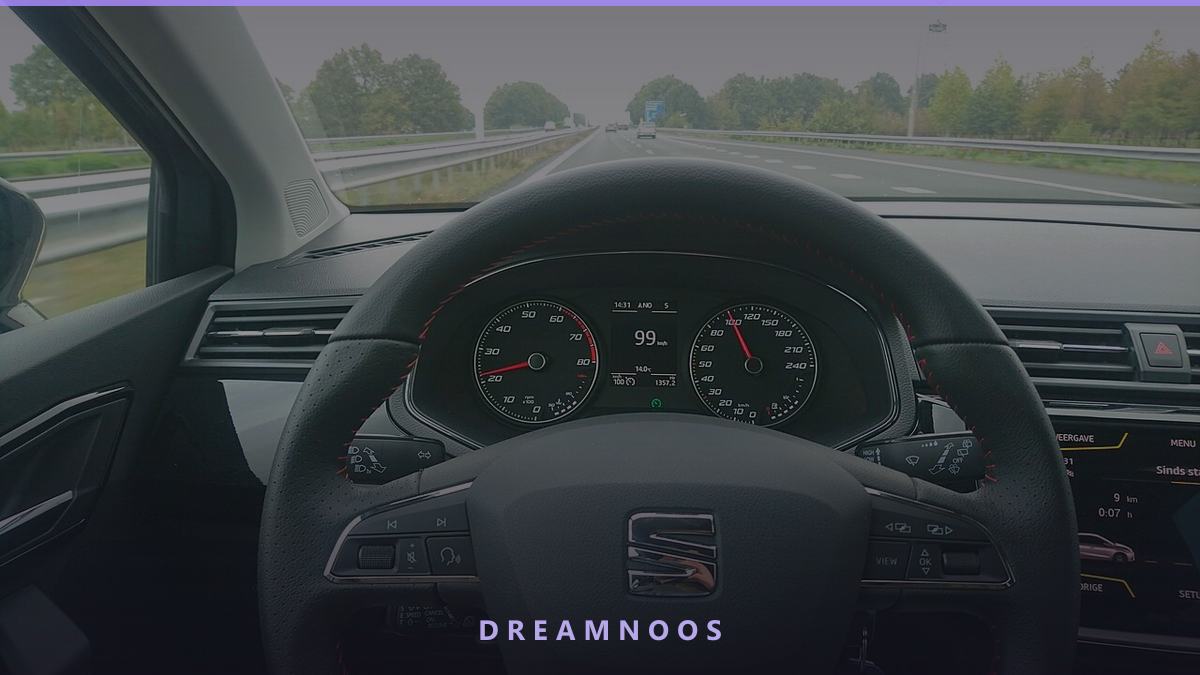
Why driving dreams are everywhere
Once a culture spends hours in cars, the dreaming mind borrows the dashboard as a life-direction diagram: lane, speed, destination, who holds the wheel. Search demand follows — “driving dream meaning” sits next to car and crash queries. DreamNoos already has deep pages for the object and the accident; this hub is the verb people type: driving.
- Object and control grammar: Car in a dream
- Crash, brakes, witness: Car accident
What to read first
- Driver or passenger? Agency vs being carried.
- Speed and brakes. Pacing and whether you can stop.
- Road quality. Familiar commute vs unknown highway vs ice.
- Who else is in the car? Family, boss, ex — shared trajectory.
- Outcome. Arrival, stall, crash, or waking before impact.
Common driving scenarios
You drive well, night road, clear destination
Competence and a path that makes sense.
Lost, no GPS, changing signs
Direction anxiety — career or identity without a map.
Cannot find the brakes / pedal is mush
Classic loss-of-control variant; pair with the accident article even if you do not crash.
Wrong side of the road or oncoming traffic
Conflict with a rule or with other people’s direction.
Driving from the back seat
Responsibility without authority — a role that asks you to steer without the wheel.
Parked, cannot start, keys missing
Initiation problem: you have a vehicle (job, plan) that will not engage. See keys/car object pages as needed.
Crash or near miss
Consequence anxiety. Not a literal forecast. Full reads: car accident.
Psychological readings
Continuity: people in job change, caregiving, or high-responsibility seasons report more driving dreams. The car is a self-in-motion symbol in popular psychology because it is already how many of us experience agency. Jungian “persona as vehicle” language is optional; the practical question is always who is driving.
How to interpret without omen panic
- Match speed to a real timeline you are rushing or stalling.
- Name the driver if it was not you.
- If it was a crash, treat it as control loss unless you have accident trauma — then get clinical help.
- Recurring stall vs recurring crash: blocked start vs feared consequence.
Related DreamNoos guides
- Car in a dream
- Car accident
- Being chased — vehicle-as-pursuer overlap
- Test / exam dreams — another evaluation-and-control cluster
- Dream interpreter
Real-world boundary
Not driving-safety advice. Nightmares after a real collision belong with trauma care, not with a symbol list.
Share Your Dream Experience
Had a similar dream? Share your experience or ask a question — comments appear after moderation.
No comments yet. Be the first to share your experience.