Beneath Hagia Sophia: Istanbul's Hidden Underground History
Archaeologists have cleared thousands of tons of debris beneath Hagia Sophia, revealing vaulted spaces, tunnels and clues to Istanbul's layered history.
Beneath Hagia Sophia: Istanbul’s Hidden Underground History
Above ground, Hagia Sophia tells a story of emperors, religious transformation and architectural ambition. Beneath it, archaeologists are uncovering another chapter: a complex underground world shaped by centuries of construction, water management and reuse.
Most visitors to Hagia Sophia look upward.
They admire the enormous dome, the marble columns, the mosaics and the architectural achievement that has dominated Istanbul’s historic skyline for nearly 1,500 years. Yet beneath this celebrated monument lies another part of its history, one that has remained largely inaccessible to the public.
Since February 2025, archaeologists and conservation specialists have been cleaning and documenting underground structures around the monument. The work has exposed previously inaccessible spaces, clarified connections between vaulted chambers and tunnels, and provided new information about the infrastructure beneath the historic building.
By November 2026, approximately 3,000 tons of mud and debris had reportedly been removed from the underground areas.
The discoveries are attracting attention not simply because they are hidden beneath one of the world’s most recognizable monuments. They offer a different perspective on how Constantinople managed its buildings, water systems and urban spaces over many centuries.
For travellers, they also raise an intriguing possibility: parts of Hagia Sophia’s underground history may eventually become accessible as a cultural heritage experience.
A monument with more than one historical layer
Hagia Sophia was completed in 537 CE during the reign of Byzantine Emperor Justinian I. Designed as a monumental Christian cathedral, it became one of the most influential examples of Byzantine architecture.
Its history did not end with the Byzantine period.
After the Ottoman conquest of Constantinople in 1453, the building was converted into an imperial mosque. It later became a museum in 1935 and returned to mosque status in 2020.
Each period left physical traces. Architectural elements were adapted, spaces were reused and the surrounding complex evolved as the needs of the city changed.
The underground structures reflect this same layered history.
Some spaces are associated with the infrastructure of Justinian’s building and its former atrium. Others include later interventions, including water conduits and features connected with the monument’s Ottoman-era use.
This makes the underground environment more complicated than a single network built at one moment in history.
It is better understood as a collection of structures whose relationships developed across different periods.
What archaeologists found beneath the former atrium
One of the most important areas of investigation lies beneath the former atrium of Hagia Sophia.
An atrium was an open courtyard positioned in front of the main entrance of an early Christian basilica. Hagia Sophia’s original atrium was considerably larger than the surviving spaces visible today.
Although much of its above-ground structure disappeared over time, substantial parts of its underground construction survived.
Earlier investigations in the twentieth century documented some of these spaces. However, accumulated debris prevented researchers from fully understanding their dimensions and connections.
The recent cleaning project changed that.
As material was removed, researchers identified additional underground structures and confirmed connections between spaces that had previously appeared separate.
The work also revealed tunnels extending beyond areas that had already been documented.
In some locations, what initially looked like an isolated chamber turned out to be connected to a larger arrangement of vaulted structures.
The discoveries have helped researchers reconsider the original configuration of the atrium and the extent of the underground construction supporting it.
Why the underground structures mattered to Constantinople
A major part of Istanbul’s historical development depended on managing water.
Constantinople was a large urban centre with a substantial population, monumental buildings, public spaces and imperial infrastructure. Reliable water management was essential for everyday life.
The city’s engineers developed aqueducts, reservoirs, cisterns, channels and drainage systems to collect, transport and store water.
The structures beneath Hagia Sophia provide another opportunity to examine this engineering tradition.
Researchers have documented underground spaces containing evidence of water-related infrastructure, including channels associated with the movement and management of water.
Some of these features may have supported drainage, while others were connected to distribution systems.
The exact function of every underground space has not yet been established. The available evidence suggests a complex infrastructure rather than a single-purpose tunnel network.
This distinction matters because underground structures can change their function over time. A passage built for one purpose may later become part of a drainage system, storage area or service space.
Archaeologists must therefore examine construction techniques, physical connections and historical evidence before assigning a definitive function.
The technology helping researchers understand the hidden spaces
Exploring underground architecture is not simply a matter of removing accumulated soil.
The structures can be narrow, poorly ventilated and difficult to access. Some sections also contain damaged vaults or areas where removing debris could affect structural stability.
For that reason, the investigation combines archaeological supervision with modern documentation techniques.
One important method is terrestrial laser scanning.
A laser scanner records millions of measurements of surrounding surfaces, creating a highly detailed digital representation of the space.
Researchers can use these measurements to produce:
- Architectural floor plans
- Ceiling and vault documentation
- Cross-sectional drawings
- Three-dimensional visualizations
- Measurements of the relationships between connected spaces
The resulting digital models allow researchers to examine areas that would otherwise be difficult to understand from individual photographs.
They also provide a record of the structures before further conservation work takes place.
In the published study, architect and researcher Hasan Fırat Diker describes how the cleaning process and digital documentation revealed previously unclear connections beneath the former atrium.
This approach is particularly valuable at Hagia Sophia because its architecture has undergone so many transformations. Understanding the monument requires documenting not only what survives above ground, but also the construction beneath it.
A four-chamber underground burial structure
Another area attracting attention is a four-room underground burial structure, known as a hypogeum.
The term describes an underground chamber or complex used for burial purposes.
According to statements reported in November 2026, this structure lies in the northeastern section of Hagia Sophia’s underground area and may preserve evidence from periods preceding the construction of the present monument.
Such a possibility is important.
Hagia Sophia was not built on an empty piece of land without a history. Its location belonged to a much older urban environment, and archaeological evidence from earlier periods can help reconstruct the development of the site.
However, the presence of a burial structure does not automatically establish the identity of the people buried there, its precise date or its original relationship with the later monument.
Those questions require further archaeological investigation.
The hypogeum is therefore best understood as a promising part of the ongoing research rather than a fully interpreted discovery.
How much of the underground world is actually known?
The scale of the recent cleaning operation has sometimes encouraged dramatic descriptions of a vast hidden tunnel system beneath Istanbul.
The documented evidence is more specific.
Researchers have identified and examined interconnected underground structures associated with Hagia Sophia, including vaulted chambers, passages and water-related features.
Some spaces extend beyond the areas initially expected by researchers. The published academic study also discusses the possibility that certain structures continue toward areas outside the immediate footprint of the former atrium.
But their full extent and historical relationships remain subjects of investigation.
There is no established evidence that the discoveries form one enormous secret tunnel network running beneath the entire historic peninsula.
That distinction does not make the findings less remarkable.
The actual underground architecture is already sufficiently complex to reveal how much of the monument’s history remains hidden from ordinary visitors.
Could visitors eventually explore the underground areas?
For travellers, this may be the most interesting question.
In November 2026, Türkiye’s Culture and Tourism Minister Mehmet Nuri Ersoy said that suitable sections of the underground structures could eventually be opened to visitors.
The proposal depends on conservation, structural safety and the preparation of appropriate visitor facilities.
This is important because archaeological spaces cannot simply be converted into tourist attractions.
Narrow passages, fragile masonry, limited ventilation and the movement of visitors all create practical challenges.
Some areas may require additional reinforcement or protective measures before public access becomes possible.
Authorities have discussed plans to present parts of the underground heritage through exhibitions and guided visitor experiences. However, no general public-access arrangement should be assumed until an official opening is announced.
For now, travellers should not plan a visit specifically expecting access to the newly investigated underground passages.
The main monument and its established visitor arrangements remain separate from the ongoing underground conservation project.
Hagia Sophia in the wider story of Istanbul’s underground heritage
Istanbul is already famous for its underground historical spaces.
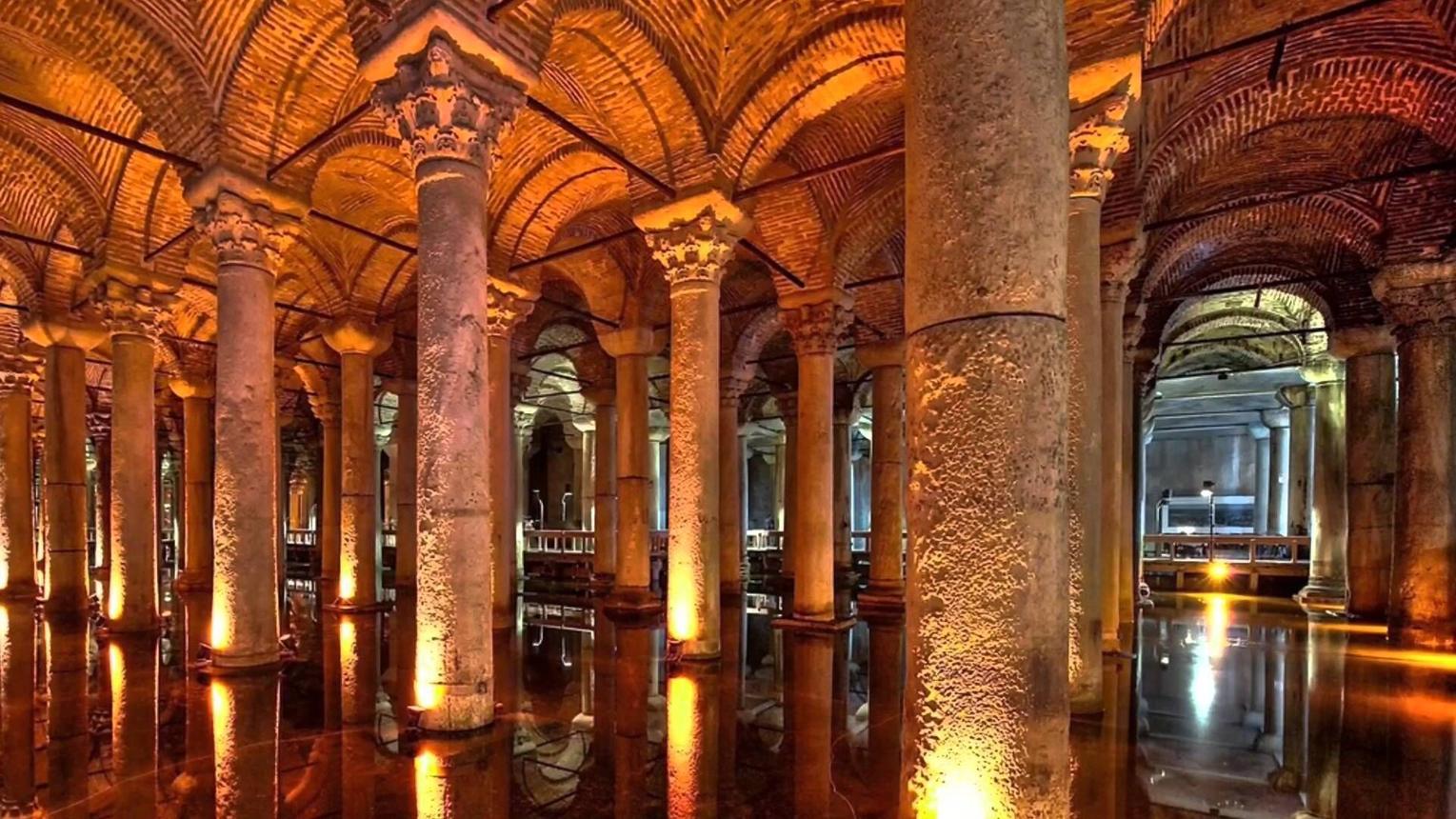
The Basilica Cistern is perhaps the best-known example. Built during the Byzantine period, it demonstrates the scale and sophistication of the city’s water-storage infrastructure.
The Theodosius Cistern and Binbirdirek Cistern offer additional examples of how the ancient city managed water.
These structures are now important cultural attractions, allowing visitors to experience parts of Istanbul that once served practical urban functions.
The discoveries beneath Hagia Sophia add another dimension to this heritage.
Unlike a single large cistern, the underground areas being investigated include a variety of architectural spaces with different construction histories and possible functions.
Their study may help researchers understand how the monument interacted with the surrounding city, how its infrastructure developed and how earlier structures were incorporated into later phases of construction.
Together, these sites reveal that Istanbul’s history is not arranged in a simple sequence of buildings standing above ground.
It is also preserved in foundations, chambers, tunnels, water channels and buried architectural layers.
A different reason to look at Hagia Sophia
The most famous view of Hagia Sophia is from its exterior, where the dome and minarets define one of Istanbul’s most recognizable silhouettes.
Inside, its scale and decoration tell the story of an architectural achievement that has influenced buildings far beyond the city.
The underground discoveries offer a different experience of the same place.
They shift attention from monumental appearance to the practical systems that made the building possible: foundations, vaults, water infrastructure and spaces that changed as the city changed.
The research is still progressing, and many questions remain unanswered. The full extent of the underground structures has not been established, and future public access will depend on conservation and safety assessments.
But the project has already demonstrated something important.
A monument’s history does not end at the level of its visible walls. Beneath Hagia Sophia, the surviving architecture preserves evidence of how generations of people built, adapted and maintained one of the most significant landmarks in world history.
For visitors who know Istanbul mainly through its skyline, this hidden layer may eventually become another way to understand the city.
Sources and Further Reading
-
Diker, Hasan Fırat (2026). “Newly Revealed Subterranean Structures Beneath Hagia Sophia’s Atrium.” Open Archaeology, 12(1). Read the open-access research paper.
-
Hürriyet Daily News (November 3, 2026). “Restoration continues to open Hagia Sophia’s underground chambers to visitors.” Read the report.
-
eKathimerini (November 2, 2026). “Turkey hopes to open Hagia Sophia’s underground structures to public.” Read the report.
-
UNESCO World Heritage Centre. Historic Areas of Istanbul.
Editorial note: The academic study documents findings from the investigation through June 20, 2025. The reported removal of approximately 3,000 tons of debris reflects a later project update in November 2026. The functions and historical relationships of all underground structures have not yet been conclusively established.