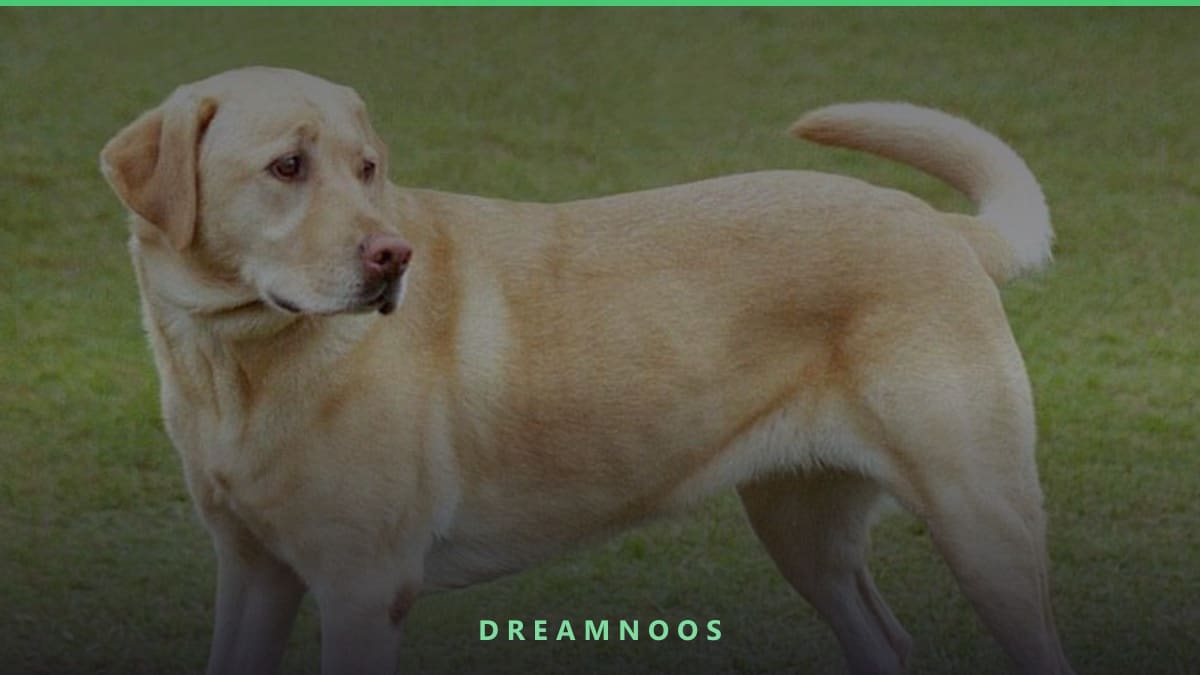
Definition & overview
Dreams featuring dogs are among the most common social-symbol dreams. Unlike distant symbols, a dog appears in a relational role: it approaches, follows, guards, attacks, or accompanies. Because of that, dog dreams are usually interpreted as mirrors of trust, alliance, boundary, and protection in waking life. The same dog image can signal loyalty and support in one dream, and pressure or threat in another, depending on behavior and emotional tone.
Classical interpretation
Classical dream literature treats the dog as a symbol with dual valence. In several Islamic and Mediterranean sources, a calm or useful dog can indicate support, guardianship, or practical loyalty, while a hostile dog indicates a low-grade but persistent threat. The tradition emphasizes context: a barking dog in public differs from a silent dog inside the home, and a guarding dog differs from a pursuing dog.
This dual framework is consistent across later manuals: the dog is not “good” or “bad” by default; its role in the dream determines the lane.
Symbolic meaning
Symbolically, the dog stands at the boundary between instinct and relationship. It represents closeness, territory, warning, and dependence. Common symbolic lanes include:
- Companion dog -> trusted alliance, emotional safety.
- Guard dog -> protection, vigilance, defensive posture.
- Chasing or biting dog -> threat to personal boundary or trust.
- Injured or abandoned dog -> neglected loyalty or weakened support.
Dog dreams are often strongest when the dreamer is navigating questions of who can be trusted and where limits should be set.
Psychological perspective
From a depth-psychology perspective, dog dreams often represent instinct brought into social form. A friendly dog may reflect integrated protective instincts; an aggressive dog may reflect unintegrated fear or anger projected onto others. In cognitive terms, dogs are emotionally salient social images, so the dreaming mind uses them efficiently to stage relationship stress, safety-seeking, and attachment concerns.
Psychological readings align well with classical lanes: support, warning, loyalty, and conflict all remain active interpretive options.
Contextual variations
- Friendly dog approaching tends to read as support entering the dreamer’s life.
- Dog barking repeatedly often reads as an ignored warning signal.
- Dog inside the home points to family or close-circle trust dynamics.
- Pack of dogs amplifies social pressure and group conflict themes.
- Dog on a leash suggests controlled instinct or constrained protection.
Positive/negative interpretation conditions
Positive readings are more likely when the dog is calm, protective, or cooperative; when the dreamer feels safe; and when the dream ends in stable resolution. Cautionary readings become stronger when the dog pursues, bites, or corners the dreamer, especially if the dream ends unresolved or in panic. A bite followed by recovery can signal conflict already being processed; unresolved injury signals boundary risk still active in waking life.
Common scenarios
- Being followed by a friendly dog. Reliable support nearby.
- A dog guarding your door. Protective boundary around home life.
- Being chased by a dog. Avoided conflict or fear approaching awareness.
- Dog bite to hand or leg. Boundary violation in work/action lane.
- Lost dog dream. Anxiety about loyalty, responsibility, or attachment.
- Rescuing a dog. Reclaiming neglected care or protective instinct.
Non-obvious interpretive insights
- Distance changes meaning. Watching a threatening dog from behind a barrier often reads as anticipatory anxiety; being physically cornered reads as active boundary pressure.
- Leashed aggression differs from free aggression. A hostile leashed dog often points to controlled conflict in formal systems (work, rules, institutions), while an unleashed hostile dog points to informal, personal conflict.
- Known dog vs unknown dog. A familiar dog usually maps to an existing trust network; an unknown dog often maps to emerging risk or untested alliance.
- Pack behavior matters more than breed. Pack coordination typically reflects social dynamics, group pressure, or reputation risk rather than individual betrayal.
- Protective growling can be positive. A dog warning without attacking may symbolize healthy defensive instinct rather than threat.
- Feeding a threatening dog is a key signal. If the dog calms after feeding, the dream often reflects a conflict that can be de-escalated through measured response.
- Injury location shifts lane. Bite to hand often maps to work/action conflict; bite to leg maps to direction, movement, and life-path interference.
- Silent dog + eye contact often indicates judgment sensitivity. This pattern appears in dreams reported during social evaluation periods.
Emotional branching
- Dog + fear -> threat, boundary pressure, unresolved conflict.
- Dog + relief -> protection, trusted support, emotional grounding.
- Dog + shame -> social judgment, fear of exclusion, reputation stress.
- Dog + nostalgia -> attachment memory, unfinished loyalty bonds.
- Dog + anger -> contested authority and reactive defense.
High-intent variants (micro-intent map)
- Black dog in dream: hidden fear, depressive weight, or durable unresolved pressure.
- White dog in dream: visible support, reconciliation, or trustworthy alliance.
- Injured dog in dream: weakened protection system, neglected care network.
- Puppy in dream: early-stage trust, new bond requiring responsibility.
- Dead dog in dream: ending of a loyalty cycle, grief around trust.
- Barking dog in dream: warning signal already present in waking life.
Comparative cultural lens
- Islamic readings: loyalty/protection vs nuisance/threat depending on behavior and setting.
- Jungian readings: instinctive protection, shadow conflict, and loyalty archetypes.
- Christian-inflected readings: vigilance, fidelity, and moral companionship.
- Persian literary tradition: companionship and betrayal tension in social life.
Observed recurring patterns
- Recurring dog-chase dreams are frequently reported during periods of unresolved interpersonal tension where confrontation is delayed.
- Repeated dreams of a calm guarding dog often appear when the dreamer is rebuilding personal boundaries after emotional instability.
- Dog-bite dreams that shift from panic to controlled response across repetitions commonly track improvement in conflict handling.
Common co-occurring symbols
- Dog + house: protection, territorial boundaries, and family trust dynamics.
- Dog + door/gate: threshold control, permission, and social access concerns.
- Dog + road/path: decision pressure, loyalty tests, and directional conflict.
Interpretive contradictions
- Not every aggressive-dog dream indicates external threat; in many cases it reflects the dreamer’s own defensive system activating under stress.
- A friendly dog is not always purely positive; it can also symbolize dependency patterns if the dreamer cannot move without it.
Named interpretive frameworks
- Threat Distance Framework: The farther the dreamer is from canine aggression, the more the dream tends toward anticipatory anxiety instead of immediate conflict.
- Boundary Stress Pattern: Barking, chasing, and biting map to escalating boundary pressure across social, domestic, and professional settings.
- Symbolic Damage Mapping: Bite location shifts interpretation lane (hand/action, leg/direction, face/social identity).
Source-anchored notes
- Across several medieval Islamic manuals, dog imagery is interpreted primarily through behavior and proximity rather than breed identity.
- Later analytical psychology reframes this lane as instinct-in-relationship, especially when dogs switch from threat to guidance across repeated dreams.
- In comparative readings, threshold scenes (door, gate, road) repeatedly carry trust-and-access questions more than literal danger.
Stillness can mislead.
Entity psychology — dog
Instinct mirror — dog carries loyalty your psyche projects onto a living symbol. Bond type — Wild, domestic, or liminal dog shifts whether the dream feels relational or archetypal. Movement read — Flight, chase, stillness, or sound from the dog tilts fear vs awe. Scale of threat — Size and teeth/claws (or their absence) calibrate vulnerability vs power. Human relation — Pet, predator, herd member, or pest—your role toward dog matters. Ecology hint — Habitat in the dream (home, forest, water) grounds the dog in waking context.
Traits to track: loyalty, boundary guard, companionship.
Meaning breakdown (expanded)
- Core dog symbol — Your waking associations to dog anchor the read before any glossary.
- Setting layer — Home, travel, work, or nature calibrates tone and scale.
- Your role — Witness, cause, rescuer, or fugitive shifts agency.
- Emotion on waking — Fear, grief, relief, or shame tilts integration vs avoidance.
- Vs cluster links — Compare related hub pages in your graph—not interchangeable symbols.
Extended psychological read
Dog in a Dream dreams often follow recent contact with dog imagery—news, pets, phobia, or childhood memory. The presence layer adds boundary guard; your role (protect, flee, feed) matters more than species folklore. Map waking bond before universal animal lists.
Cultural and classical interpretation
Folk traditions often assign moral or omen weight to animals, but personal bond and behavior in the dream outweigh generic catalogs. Classical bestiaries treated creatures as mirrors of temper—loyalty in dog, pride in lion, cunning in fox—while modern ecology adds habitat loss undertones for some dreamers.
Additional scenarios
You feed dog. Care bond or instinct meeting routine.
Dog speaks or looks at you. Message dream—note emotion on eye contact.
Dog changes size. Threat vs awe—scale shifts before meaning.
Dog injured but alive. Complicated hope—function crippled, not ended.
Pack or flock of dog. Belonging or overwhelm—count and noise calibrate.
Dead dog that moves. Rule break—symbol shifts from ended to uncanny.
Wild dog in your home. Instinct inside private life—boundary breach.
Dog approaches slowly. Trust or threat—pace matters more than species lore.
Child with dog. Innocence meets instinct—protector read.
Stranger controls dog. Projection—who holds the symbol in waking life?
Negative signals vs positive signals
| Pattern | In dream | Waking link |
|---|---|---|
| Loop | Same dog returns | Unfinished theme |
| Spike | Sudden {attr} on dog | Recent stress fair |
| Drop | dog vanishes | Avoidance or release |
| Shift | dog transforms | Identity change read |
How to interpret this dream
- Name the setting — Where dog appeared and who watched.
- Your action — Did you tend, flee, fix, or only observe dog?
- Waking emotion — Fear, grief, relief, or shame on waking.
- Recent dog link — Media, conversation, or memory this week.
- One line journal — What {attr} changed about dog in scene.
FAQ (expanded)
Vs similar symbols? Dog psychology differs from swap-in entities—use cluster contrasts.
Childhood memory of dog? Personal history outweighs generic omen lists.
Nightmare vs curious dream? Waking emotion calibrates threat, not dictionary alone.
Recurring dog? Track one waking theme per week—pattern over single night.
Conclusion (expanded)
Name one role you played, one emotion on waking, and one waking link to dog. Revisit cluster pages when dog repeats—integration beats prophecy spiral.
Snippet-oriented recap
Dog dreams map loyalty, boundary guard, companionship through scene context. Link related hub entries—not fixed omen gloss alone.
Share Your Dream Experience
Had a similar dream? Share your experience or ask a question — comments appear after moderation.
No comments yet. Be the first to share your experience.