
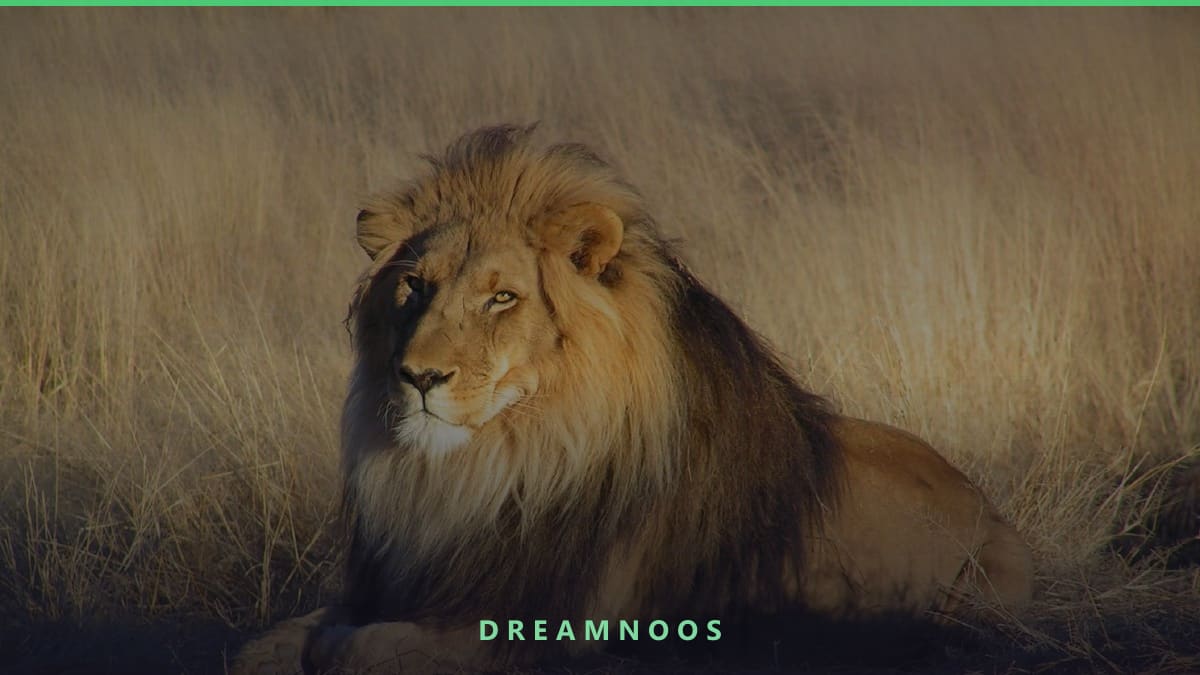
What a lion attack dream means
A lion attack dream usually reflects high-pressure confrontation.
It often appears when the dreamer feels threatened by a dominant force, conflict, or urgent boundary violation.
Classical readings of lion attack dreams
Classical interpretations often treat attacking predators as warning symbols around danger, authority conflict, or unchecked aggression.
Meaning depends on outcome: surviving or resisting can indicate resilience, while paralysis may point to overwhelm.
Lion Attack symbolism
- Lion attacks directly: visible threat, direct confrontation.
- Roaring before attack: warning phase before escalation.
- Injury from attack: emotional or social boundary damage.
- Fighting back: reclaiming control under pressure.
The psychology of lion attack dreams
Psychologically, this dream can mirror fight-flight-freeze responses.
It may surface when the nervous system perceives chronic threat in work, relationships, or unresolved power dynamics.
How context changes a lion attack dream
- Attack at home: threat perceived within safe spaces.
- Attack in public: social exposure and status pressure.
- Multiple lions: layered stressors rather than a single issue.
- Night attack: uncertainty and unconscious fear amplification.
Positive/negative interpretation conditions
Positive lane appears when the dream ends with strategy, escape, or support.
Cautionary lane strengthens with repeated helplessness, injury, and panic loops.
Common lion attack dream scenarios
- A lion suddenly attacks while you are walking.
- The lion roars first, then charges.
- You try to hide but are discovered.
- You defend yourself and wake up with adrenaline.
Entity psychology — lion attack
Instinct mirror — lion attack carries instinct your psyche projects onto a living symbol. Bond type — Wild, domestic, or liminal lion attack shifts whether the dream feels relational or archetypal. Movement read — Flight, chase, stillness, or sound from the lion attack tilts fear vs awe. Scale of threat — Size and teeth/claws (or their absence) calibrate vulnerability vs power. Human relation — Pet, predator, herd member, or pest—your role toward lion attack matters. Ecology hint — Habitat in the dream (home, forest, water) grounds the lion attack in waking context.
Traits to track: instinct, wild mirror, unclassified creature.
What lion attack represents in dreams
- Core lion attack symbol — Your waking associations to lion attack anchor the read before any glossary.
- Setting layer — Home, travel, work, or nature calibrates tone and scale.
- Your role — Witness, cause, rescuer, or fugitive shifts agency.
- Emotion on waking — Fear, grief, relief, or shame tilts integration vs avoidance.
- Vs cluster links — Compare related hub pages in your graph—not interchangeable symbols.
Extended psychological read
Lion Attack in a Dream dreams often follow recent contact with lion attack imagery—news, pets, phobia, or childhood memory. The presence layer adds wild mirror; your role (protect, flee, feed) matters more than species folklore. Map waking bond before universal animal lists.
Lion Attack dreams across cultures and traditions
Folk traditions often assign moral or omen weight to animals, but personal bond and behavior in the dream outweigh generic catalogs. Classical bestiaries treated creatures as mirrors of temper—loyalty in dog, pride in lion, cunning in fox—while modern ecology adds habitat loss undertones for some dreamers.
More lion attack dream scenarios
You search for lost lion attack. Missing bond or responsibility theme.
Lion Attack injured but alive. Complicated hope—function crippled, not ended.
Dead lion attack that moves. Rule break—symbol shifts from ended to uncanny.
Wild lion attack in your home. Instinct inside private life—boundary breach.
Stranger controls lion attack. Projection—who holds the symbol in waking life?
Child with lion attack. Innocence meets instinct—protector read.
You flee from lion attack. Fear or respect—context decides which.
Lion Attack changes size. Threat vs awe—scale shifts before meaning.
Lion Attack approaches slowly. Trust or threat—pace matters more than species lore.
Lion Attack speaks or looks at you. Message dream—note emotion on eye contact.
Negative signals vs positive signals
| Pattern | In dream | Waking link |
|---|---|---|
| Loop | Same lion attack returns | Unfinished theme |
| Spike | Sudden {attr} on lion attack | Recent stress fair |
| Drop | lion attack vanishes | Avoidance or release |
| Shift | lion attack transforms | Identity change read |
How to read your lion attack dream
- Familiar or archetype — Known lion attack vs stranger figure.
- Intensity — Mild unease vs full panic around lion attack.
- Agency check — Could you influence lion attack or frozen?
- Contrast hub — How this differs from plain lion attack dreams.
- Next step — One waking boundary or care act tied to symbol.
More lion attack dream questions
Vs similar symbols? Lion Attack psychology differs from swap-in entities—use cluster contrasts.
Childhood memory of lion attack? Personal history outweighs generic omen lists.
Nightmare vs curious dream? Waking emotion calibrates threat, not dictionary alone.
Recurring lion attack? Track one waking theme per week—pattern over single night.
What your lion attack dream is telling you
Name one role you played, one emotion on waking, and one waking link to lion attack. Revisit cluster pages when lion attack repeats—integration beats prophecy spiral.
Snippet-oriented recap
Lion Attack dreams map instinct, wild mirror, unclassified creature through scene context. Link related hub entries—not fixed omen gloss alone.
Share Your Dream Experience
Had a similar dream? Share your experience or ask a question — comments appear after moderation.
No comments yet. Be the first to share your experience.