How Ancient Trade Routes Shaped the Flavours of World Cuisine
A study of 104,770 recipes reveals how historic trade networks helped shape the flavour similarities between cuisines around the world.
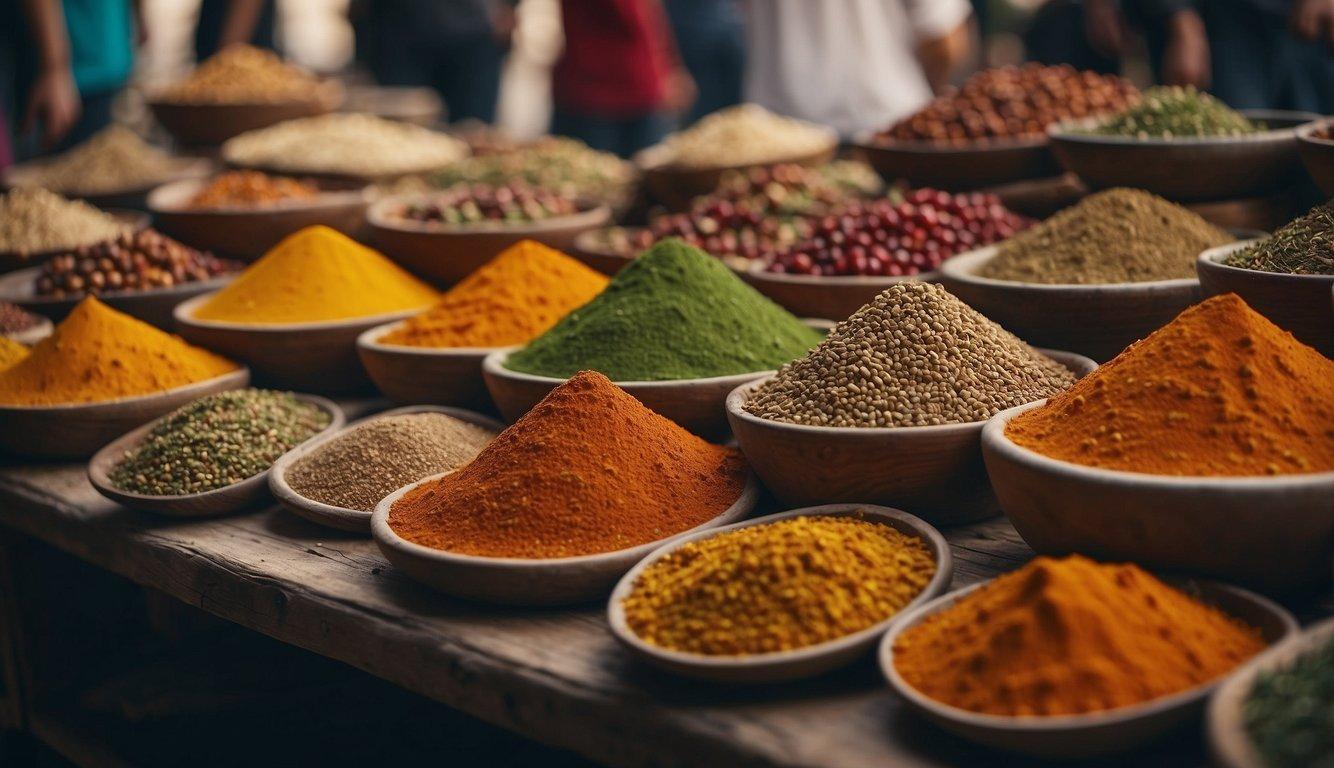
How Ancient Trade Routes Shaped the Flavours of World Cuisine
A bowl of food can carry a surprisingly long history.
The spices in a stew, the ingredients in a familiar sauce and the combination of flavours on a dinner table may reflect exchanges that began centuries before modern nations existed. Ingredients moved between regions through merchants, sailors, migrants and empires. Over time, local cooks incorporated unfamiliar products into established culinary traditions, creating combinations that eventually became part of everyday life.
The history of food has long documented these journeys. But a more difficult question has remained: can the influence of historical trade be detected in the flavour structures of modern cuisines?
A study published in npj Heritage Science on November 3, 2026, offers a quantitative approach to answering that question. Researchers Jing Gao, Dong Lin and Jianfeng Hu analysed 104,770 recipes and 1,507 ingredients to investigate whether historical trade-route connections help explain similarities between national cuisines.
Their findings suggest that the historical routes connecting societies may be more informative than geographical distance alone when comparing the flavour profiles of modern culinary traditions.
The research provides a new way to examine food not simply as a collection of recipes, but as a form of cultural heritage shaped by centuries of exchange.
The Silk Road was more than a route for silk
The Silk Road is often imagined as a single commercial highway connecting China with Europe. In reality, it was a changing network of overland and maritime connections linking communities across Asia, the Middle East, Africa and Europe.
Merchants travelled through cities and trading centres, while ships carried goods between ports. Different routes connected to one another, creating overlapping networks through which products, knowledge and cultural practices could circulate.
Silk was an important commodity, but it was far from the only one.
Spices, tea, aromatic plants, grains, textiles and other goods moved through these networks. Some ingredients were valuable because they were rare in distant markets. Others became important because they could be cultivated, adapted or incorporated into local food traditions.
Trade did not simply transfer ingredients from one place to another. It created opportunities for people to experiment with unfamiliar flavours and combine them with ingredients already available in their own regions.
That process took place over generations. A product that first arrived as an imported curiosity could eventually become an ordinary part of a local dish.
This transformation is one reason why modern food traditions cannot always be understood by looking only at their geographical origins.
Researchers examined more than 100,000 recipes
The 2026 study approached culinary history through a combination of recipe analysis, food chemistry and historical trade networks.
The researchers assembled three public recipe datasets:
- 56,498 recipes covering 11 cuisines, alongside an existing ingredient–flavour-compound network.
- 39,774 recipes representing 20 national cuisines.
- 8,498 recipes covering 20 regional cuisines in China.
Together, these datasets contained 104,770 recipes.
The ingredient network included 1,507 ingredients and 221,777 connections based on shared flavour compounds.
This molecular perspective matters because ingredients do not interact only through their names or culinary categories. Different ingredients can share chemical compounds associated with flavour and aroma.
By mapping ingredients onto this network, the researchers could compare cuisines through their patterns of ingredient use and flavour relationships.
The study then examined these patterns alongside a historical network consisting of 18 trade routes and 50 documented ingredient-diffusion events.
The routes included overland and maritime branches of the Silk Road, the Indian Ocean spice trade, the Columbian Exchange, Manila galleon routes and older trade networks within Europe and the Americas.
This broader framework is important. The movement of ingredients across the world was not the result of one trading system. It developed through multiple networks operating in different historical periods.
Historical connections predicted flavour similarity
One of the study’s central findings was that cuisines connected through fewer historical trade-route steps tended to have more similar flavour profiles.
The researchers tested this relationship while controlling for geographical distance.
They reported a partial Mantel correlation of 0.479, with a p-value of 2.0 × 10⁻⁴.
In statistical terms, this indicates a substantial association between historical route connectivity and flavour similarity within the dataset.
The researchers also found that geographical distance had no detectable independent predictive effect after historical connectivity was included in their main model.
This does not mean geography is irrelevant to food. Climate, agriculture, local ecosystems and the availability of ingredients remain important. Rather, the results suggest that historical connections help explain why some distant culinary traditions share similarities that physical proximity alone cannot fully account for.
The analysis also underwent several robustness checks. The relationship remained detectable when individual routes were removed, when alternative ingredient-distance measures were used and when portions of the mapped ingredient data were omitted.
These tests strengthen the main association, although they do not establish that historical trade was the sole cause of the similarities observed.
The ingredients that connect different flavour communities
Another interesting part of the research concerns what the authors describe as flavour bridges.
In a network, a bridge is an element that connects otherwise separate communities. Applied to food, an ingredient can occupy an important position between groups of flavours that would otherwise be less connected.
The researchers identified several prominent ingredients in the network, including black tea, coffee, soybeans, green tea and strawberry.
Black tea had the highest bridge score in the analysis.
The researchers then compared these network positions with documented historical ingredient-diffusion events.
Of the 43 distinct diffused ingredients considered in this part of the study, 30 could be mapped onto the network’s selected backbone. Those mapped ingredients were more likely to occupy central positions between flavour communities than the other ingredients in the comparison.
The relationship was not equally strong under every statistical treatment. After a conservative correction for selection bias, the estimated effect became smaller, and the most stringent imputation test did not retain statistical significance.
That qualification matters. It means the bridge analysis is suggestive evidence about how historical diffusion may leave traces in modern flavour networks, rather than a definitive measurement of the historical importance of every traded ingredient.
Why recently introduced ingredients can remain distinctive
The study also examined how the network position of ingredients relates to the time since their first documented diffusion.
Its results suggest that more recently transferred ingredients can remain positioned between flavour communities, while ingredients introduced much earlier may become more deeply incorporated into local culinary structures.
Consider the ingredients associated with the Columbian Exchange, the movement of plants, animals and other products between the Americas and the rest of the world after European contact.
Tomatoes, potatoes, maize, cocoa and vanilla are now deeply familiar in many cuisines far from their original centres of cultivation.
Yet their adoption was not immediate or uniform.
Different communities incorporated these ingredients into existing cooking practices in different ways. Over time, their original status as foreign products became less visible in everyday food culture.
By contrast, a newer imported ingredient may still retain a recognisable identity associated with its place of origin.
The researchers found a statistical relationship between the documented timing of diffusion and ingredient positions in their flavour network. However, the authors treated this temporal result as exploratory because its direction depended on how historical age was weighted in the model.
The more robust finding was the relationship between trade-route connectivity and flavour similarity.
Food history is also a history of adaptation
The movement of ingredients does not automatically produce identical dishes.
A product may travel thousands of kilometres and become part of several very different culinary traditions.
Its role depends on local agriculture, cooking techniques, religious practices, available ingredients and established preferences.
An ingredient can be used as a central seasoning in one region, a minor addition in another or a component of a completely different preparation elsewhere.
This is why culinary exchange should not be understood as a simple process of copying recipes.
Local cooks adapt what reaches them.
They combine unfamiliar products with established techniques, adjust flavours to suit local preferences and create new dishes that may eventually become symbols of regional identity.
The result is a complex relationship between movement and continuity.
Trade introduces new possibilities, while local culinary traditions determine how those possibilities are used.
Can a flavour network preserve cultural heritage?
Food is often recognised as an important part of intangible cultural heritage.
Traditional cooking knowledge can include techniques, ingredient selection, seasonal practices, family recipes and the social occasions surrounding meals.
Yet documenting a cuisine is difficult because much of its knowledge is not preserved in written records.
A recipe may list ingredients and quantities without explaining why particular combinations became traditional. A dish may also change gradually as ingredients become more available or cooking practices evolve.
The researchers argue that computational approaches can help document this less visible dimension of culinary heritage.
By comparing recipes and their ingredient relationships, researchers can build measurable representations of culinary traditions.
Such networks could support future studies of regional food identities, ingredient diffusion and the long-term effects of cultural exchange.
They may also help researchers examine how culinary traditions change as migration, trade and global food systems introduce new ingredients.
However, a network cannot capture everything that makes a cuisine meaningful.
Taste is influenced by preparation, texture, aroma, memory and social context. Recipes do not always represent what people actually cook, and a database cannot fully reproduce the knowledge passed between generations in kitchens.
Computational analysis is therefore best understood as an additional research tool, not a replacement for food history, ethnography or direct documentation of culinary practice.
The limits of measuring a world’s worth of food
The study is ambitious, but its limitations deserve attention.
First, the main national-cuisine comparison involved 20 modern English-language cuisine datasets. These cannot represent every regional tradition, household practice or culinary community around the world.
Second, ingredient mapping was incomplete. The researchers reported coverage ranging from approximately 63.4% to 78.5% across the national cuisine datasets, with a mean of 72.9%.
Some ingredient names could not be matched to the molecular flavour network. Compound ingredients and regional terminology also created challenges.
Third, historical trade routes are reconstructed from documented evidence. The precise movement of individual ingredients was not always recorded, and the dates used in historical diffusion models can involve uncertainty.
Finally, statistical association does not establish direct causation. Shared ecological conditions, cultural histories and other forms of contact may contribute to similarities between cuisines.
The researchers explicitly distinguish their more robust connectivity finding from the more uncertain results concerning the age of trade routes.
That distinction makes the research more useful: it shows not only what the model can reveal, but also where its conclusions become less secure.
A world connected through what people eat
The history of global food is often told through famous ingredients: tea, coffee, sugar, spices, tomatoes and potatoes.
But the deeper story is about the people who carried them, traded them, cultivated them and found new ways to use them.
The 2026 study offers evidence that these historical connections remain visible in the flavour structures of modern cuisines. Its analysis suggests that trade networks helped shape culinary similarities across regions, leaving patterns that can still be detected in contemporary recipes.
A familiar combination of ingredients may therefore represent more than a local cooking tradition. It can also be part of a much longer history of exchange and adaptation.
Food has always connected people across distances. Modern computational research is beginning to show how those connections can be studied in a more systematic way.
The next time an ingredient feels inseparable from a particular cuisine, its history may be considerably more international than its place on the dinner table suggests.
Research source
Gao, J., Lin, D. & Hu, J. (2026). “Historical trade-route connectivity predicts the flavour map of world cuisines.” npj Heritage Science. Published November 3, 2026.
https://doi.org/10.1038/s40494-026-03104-3
Open-access research article. The study is an early-access Article in Press and may be updated in its final Version of Record.
Editorial note: The article distinguishes statistical associations from direct historical causation. Findings about route connectivity are more robust than the exploratory findings about the age of routes and ingredient diffusion.