
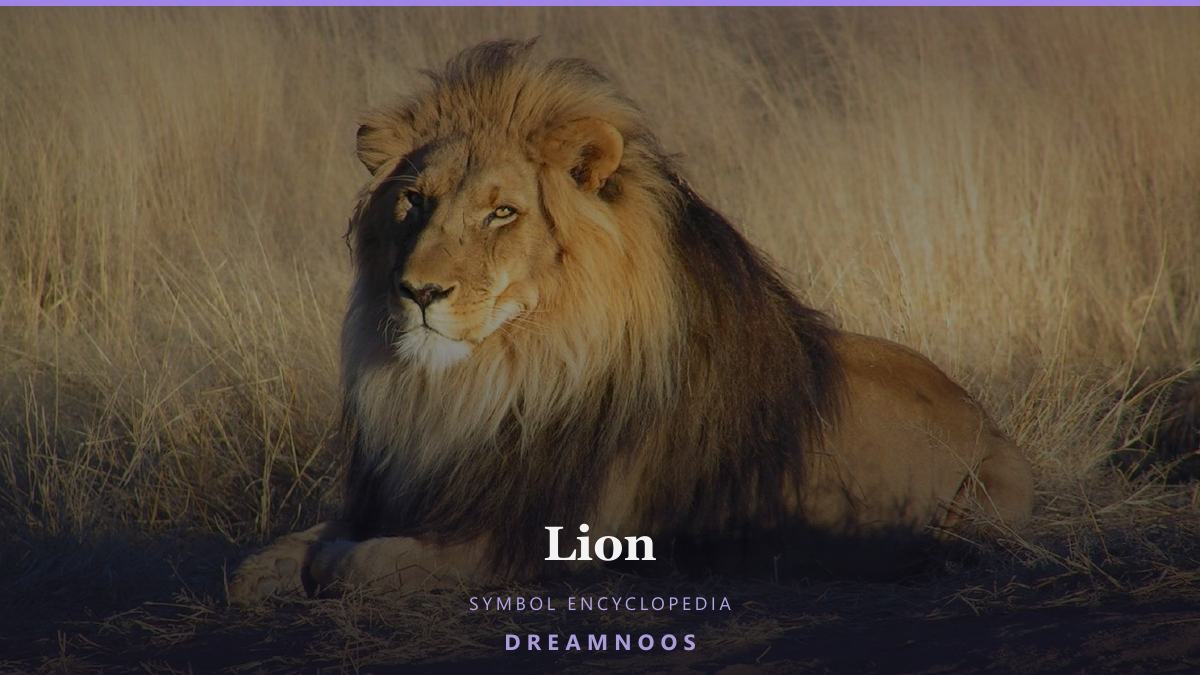
Lion
Lion symbolism in dreams — royal power, courage, rage, pride, and the predator you admire or fear.
Across an unusual range of unconnected traditions, the lion arrived at the same symbolic position: solar, royal, and legitimately powerful. Egyptian, Mesopotamian, Greek, Persian, biblical, and later European heraldic sources all place it near the top of a hierarchy, and all treat its power as a kind that is displayed rather than hidden. The lion does not ambush from concealment the way the snake does. It is visible, territorial, and announces itself.
That visibility is what distinguishes lion dreams from other predator dreams. A dreamer confronted by a lion is confronted by power that is not pretending to be anything else — which is why the symbol so often attaches to authority figures, and to the dreamer’s own capacity for force.
The four layers
Authority. The most common reading in modern reports. A lion frequently stands in for a person who holds power over the dreamer — an employer, a parent, an institution’s representative — or for the dreamer’s own position of authority over others. The animal’s behaviour in the dream reports on the relationship: a lion that watches without attacking reads very differently from one that charges, and both differ from one that ignores the dreamer entirely.
Rage. The lion is one of the standard images for anger in the dream vocabulary, and specifically for anger that has physical force behind it. Dreams of a lion loose in a house, breaking out of an enclosure, or roaring at close range tend to accompany waking periods in which the dreamer is carrying more anger than their situation permits them to express. Where the dreamer is afraid of the lion, the reading often concerns fear of their own capacity for that force rather than fear of someone else’s.
The pride. Lions are social predators, and dreams involving groups of them introduce a dimension the solitary-predator symbols lack. Pride dreams — a hierarchy of animals, a dominant male, hunting females, cubs — tend to map onto family systems and workplace hierarchies. The dreamer’s position within the group is usually the interpretive centre: peripheral, protected, challenged, or in charge.
The tamed lion. The scenario in which the animal is calm, allows approach, or accompanies the dreamer belongs to a distinct and well-established reading: integrated strength. Power that is available without being destructive. This is the configuration the Strength card in tarot depicts directly, and dreams of this shape tend to be reported during periods when a dreamer has become able to hold anger or authority without either suppressing it or being run by it.
Attacking versus watching
The single most discriminating detail in this symbol is what the lion does, and the difference between attack and observation reverses the reading almost entirely.
An attacking lion is usually a threat dream, and the standard reading applies: something in waking life is bearing down on the dreamer with more force than they can meet. Where these recur, the interpretive tradition consistently points at situations of sustained avoidance — the pursuit does not stop while the thing being avoided remains unaddressed. Dreams of being hunted specifically belong more to the chase vocabulary than to the lion’s.
A watching lion is a different dream entirely. Being observed by a large predator that does not act is one of the more distinctive scenarios in this symbol, and it tends to correspond to power that is present, aware of the dreamer, and currently withholding — a superior who has noticed them, a conflict that has not yet been opened, a capacity in the dreamer that is available but not yet used.
The lioness deserves a separate note. Where dreamers distinguish the animal’s sex, lionesses tend to appear in readings concerning protection, provision, and maternal force rather than display — the hunting member of the pride rather than its figurehead.
How to read a lion-coded dream
1. What is the lion doing? Attacking, watching, sleeping, approaching, ignoring. The primary discriminator.
2. Are you afraid? Fear and admiration produce different readings from identical imagery, and dreamers usually know which they felt.
3. Is it contained? Zoo, cage, chain, or free. Containment reports on whether the power in question is currently under management, and whether that management is holding.
4. One or many? A pride shifts the reading toward group hierarchy and the dreamer’s place in it.
5. Is the lion yours? Dreams of owning, keeping, or being accompanied by a lion belong to the integration reading rather than the threat reading.
What this hub aggregates
The DreamNoos lion hub collects dream topics turning on lions and large cats in their predatory and regal registers — including attacks, roaring, prides, caged lions, and tamed ones. For the adjacent domestic-scale symbol see cat; for the hunted scenarios see chase.
Sideways, this hub points to fear and to the anger emotion, which between them cover most lion dreams. The protector archetype is relevant where the animal defends rather than threatens, and readers interested in the solar and regal associations may find the Leo material a useful adjacent vocabulary — optional context rather than interpretation.
Lions ask whether the dreamer’s power serves the pride, or devours it.
Real-world reference: Lion on Wikipedia — for the literal, non-symbolic background on lion.
Explore Lion beyond dreams
This symbol hub covers dream interpretation. You can also explore lion through tarot, astrology, and angel numbers — reflective lenses, not competing truths.
Related tarot cards
Related zodiac signs
Angel numbers
Describe your dream in the interpreter — try keywords like lion lioness roar
Dreams featuring lion
- Chased by a Big Lion in a Dream Chased by a Big Lion in a Dream: what this dream usually means — magnitude layered over lion symbolism, with psychological and classical readings.
- Killing a Big Lion in a Dream Killing a Big Lion in a Dream: what this dream usually means — magnitude layered over lion symbolism, with psychological and classical readings.
- Big Lion Attack in a Dream Big Lion Attack in a Dream: what this dream usually means — magnitude layered over lion symbolism, with psychological and classical readings.
- Big Lion in a Dream Big Lion dreams show lion appears at enlarged scale—pride and dominance under big, with witness, rescue, or release scenes.
- Chased by a Black Lion in a Dream Chased by a Black Lion in a Dream: what this dream usually means — the unknown layered over lion symbolism, with psychological and classical readings.
- Killing a Black Lion in a Dream Killing a Black Lion in a Dream: what this dream usually means — the unknown layered over lion symbolism, with psychological and classical readings.
- Black Lion Attack in a Dream Black Lion Attack in a Dream: what this dream usually means — the unknown layered over lion symbolism, with psychological and classical readings.
- Black Lion in a Dream Black Lion dreams show lion appears in shadow tone—pride and dominance under black, with witness, rescue, or release scenes.
- Bleeding Lion in a Dream Bleeding Lion dreams show lion wounds in plain sight—pride and dominance under bleeding, with witness, rescue, or release scenes.
- Chased by a Blue Lion in a Dream Chased by a Blue Lion in a Dream: what this dream usually means — distance and calm layered over lion symbolism, with psychological and classical readings.
- Killing a Blue Lion in a Dream Killing a Blue Lion in a Dream: what this dream usually means — distance and calm layered over lion symbolism, with psychological and classical readings.
- Blue Lion Attack in a Dream Blue Lion Attack in a Dream: what this dream usually means — distance and calm layered over lion symbolism, with psychological and classical readings.
- Blue Lion in a Dream Blue Lion dreams show lion holds cool distance tone—pride and dominance under blue, with witness, rescue, or release scenes.
- Killing an Injured Lion in a Dream Killing an Injured Lion in a Dream: what this dream usually means — lost function layered over lion symbolism, with psychological and classical readings.
- A Lion Attack That Breaks Bones in a Dream A Lion Attack That Breaks Bones: what this dream usually means — lost function layered over lion symbolism, with psychological and classical readings.
- Broken Lion in a Dream Broken Lion dreams show lion fractures without ending—pride and dominance under broken, with witness, rescue, or release scenes.
- Chased by a Burning Lion in a Dream Chased by a Burning Lion in a Dream: what this dream usually means — consuming intensity layered over lion symbolism, with psychological and classical readings.
- Killing a Burning Lion in a Dream Killing a Burning Lion in a Dream: what this dream usually means — consuming intensity layered over lion symbolism, with psychological and classical readings.
- A Lion Attack Amid Fire in a Dream A Lion Attack Amid Fire: what this dream usually means — consuming intensity layered over lion symbolism, with psychological and classical readings.
- Burning Lion in a Dream Burning Lion dreams show lion consumes in crisis—pride and dominance under burning, with witness, rescue, or release scenes.
- Chased by a Clean Lion in a Dream Chased by a Clean Lion in a Dream: what this dream usually means — order and integrity layered over lion symbolism, with psychological and classical readings.
- Killing a Clean Lion in a Dream Killing a Clean Lion in a Dream: what this dream usually means — order and integrity layered over lion symbolism, with psychological and classical readings.
- A Clean Escape from a Lion Attack in a Dream A Clean Escape from a Lion Attack: what this dream usually means — order and integrity layered over lion symbolism, with psychological and classical readings.
- Clean Lion in a Dream Clean Lion dreams show lion shows purified reset—pride and dominance under clean, with witness, rescue, or release scenes.
- Chased by a Crying Lion in a Dream Chased by a Crying Lion in a Dream: what this dream usually means — grief surfacing layered over lion symbolism, with psychological and classical readings.
- Crying After Killing a Lion in a Dream Crying After Killing a Lion in a Dream: what this dream usually means — grief surfacing layered over lion symbolism, with psychological and classical readings.
- Crying During a Lion Attack Dream Crying During a Lion Attack Dream: what this dream usually means — grief surfacing layered over lion symbolism, with psychological and classical readings.
- Crying Lion in a Dream Crying Lion dreams show lion grieves audibly—pride and dominance under crying, with witness, rescue, or release scenes.
- Chased by a Dead Lion in a Dream Chased by a Dead Lion in a Dream: what this dream usually means — finality layered over lion symbolism, with psychological and classical readings.
- Killing an Already-Dead Lion in a Dream Killing an Already-Dead Lion in a Dream: what this dream usually means — finality layered over lion symbolism, with psychological and classical readings.
- Attacked by a Dead Lion in a Dream Attacked by a Dead Lion in a Dream: what this dream usually means — finality layered over lion symbolism, with psychological and classical readings.
- Dead Lion in a Dream Dead-lion dreams still the king—authority ended, pride quieted, courage that no longer roars, or power you feared now motionless on the savanna of sleep.
- Chased by a Dirty Lion in a Dream Chased by a Dirty Lion in a Dream: what this dream usually means — contamination layered over lion symbolism, with psychological and classical readings.
- Killing a Dirty Lion in a Dream Killing a Dirty Lion in a Dream: what this dream usually means — contamination layered over lion symbolism, with psychological and classical readings.
- A Filthy Lion Attacking You in a Dream A Filthy Lion Attacking You in a Dream: what this dream usually means — contamination layered over lion symbolism, with psychological and classical readings.
- Dirty Lion in a Dream Dirty Lion dreams show lion shows soiled or stained layer—pride and dominance under dirty, with witness, rescue, or release scenes.
- Chased by a Dying Lion in a Dream Chased by a Dying Lion in a Dream: what this dream usually means — transition in progress layered over lion symbolism, with psychological and classical readings.
- Killing a Dying Lion in a Dream Killing a Dying Lion in a Dream: what this dream usually means — transition in progress layered over lion symbolism, with psychological and classical readings.
- Dying in a Lion Attack Dream Dying in a Lion Attack Dream: what this dream usually means — transition in progress layered over lion symbolism, with psychological and classical readings.
- Dying Lion in a Dream Dying Lion dreams show lion fades in process—pride and dominance under dying, with witness, rescue, or release scenes.
- Falling While Chased by a Lion in a Dream Falling While Chased by a Lion: what this dream usually means — lost support layered over lion symbolism, with psychological and classical readings.
- Killing a Falling Lion in a Dream Killing a Falling Lion in a Dream: what this dream usually means — lost support layered over lion symbolism, with psychological and classical readings.
- Falling During a Lion Attack in a Dream Falling During a Lion Attack: what this dream usually means — lost support layered over lion symbolism, with psychological and classical readings.
- Falling Lion in a Dream Falling Lion dreams show lion drops from height—pride and dominance under falling, with witness, rescue, or release scenes.
- Chased by a Flying Lion in a Dream Chased by a Flying Lion in a Dream: what this dream usually means — escape and perspective layered over lion symbolism, with psychological and classical readings.
- Killing a Flying Lion in a Dream Killing a Flying Lion in a Dream: what this dream usually means — escape and perspective layered over lion symbolism, with psychological and classical readings.
- Attacked by a Flying Lion in a Dream Attacked by a Flying Lion in a Dream: what this dream usually means — escape and perspective layered over lion symbolism, with psychological and classical readings.
- Flying Lion in a Dream Flying Lion dreams show lion rises off the ground—pride and dominance under flying, with witness, rescue, or release scenes.
- Chased by a Golden Lion in a Dream Chased by a Golden Lion in a Dream: what this dream usually means — idealisation layered over lion symbolism, with psychological and classical readings.
- Killing a Golden Lion in a Dream Killing a Golden Lion in a Dream: what this dream usually means — idealisation layered over lion symbolism, with psychological and classical readings.
- Golden Lion Attack in a Dream Golden Lion Attack in a Dream: what this dream usually means — idealisation layered over lion symbolism, with psychological and classical readings.
- Golden Lion in a Dream Golden Lion dreams show lion shines as valued ideal—pride and dominance under golden, with witness, rescue, or release scenes.
- Chased by a Green Lion in a Dream Chased by a Green Lion in a Dream: what this dream usually means — growth and renewal layered over lion symbolism, with psychological and classical readings.
- Killing a Green Lion in a Dream Killing a Green Lion in a Dream: what this dream usually means — growth and renewal layered over lion symbolism, with psychological and classical readings.
- Green Lion Attack in a Dream Green Lion Attack in a Dream: what this dream usually means — growth and renewal layered over lion symbolism, with psychological and classical readings.
- Green Lion in a Dream Green Lion dreams show lion carries living growth tone—pride and dominance under green, with witness, rescue, or release scenes.
- Chased by a Lion While Lost in a Dream Chased by a Lion While Lost: what this dream usually means — disorientation layered over lion symbolism, with psychological and classical readings.
- Killing a Lost Lion in a Dream Killing a Lost Lion in a Dream: what this dream usually means — disorientation layered over lion symbolism, with psychological and classical readings.
- A Lion Attack While Lost in a Dream A Lion Attack While Lost: what this dream usually means — disorientation layered over lion symbolism, with psychological and classical readings.
- Lost Lion in a Dream Lost Lion dreams show lion misplaced but may return—pride and dominance under lost, with witness, rescue, or release scenes.
- Chased by a Pregnant Lion in a Dream Chased by a Pregnant Lion in a Dream: what this dream usually means — potential forming layered over lion symbolism, with psychological and classical readings.
- Killing a Lion While Pregnant in a Dream Killing a Lion While Pregnant in a Dream: what this dream usually means — potential forming layered over lion symbolism, with psychological and classical readings.
- Dreaming of a Lion Attack While Pregnant Dreaming of a Lion Attack While Pregnant: what this dream usually means — potential forming layered over lion symbolism, with psychological and classical readings.
- Pregnant Lion in a Dream Pregnant Lion dreams show lion swells before release—pride and dominance under pregnant, with witness, rescue, or release scenes.
- Chased by a Red Lion in a Dream Chased by a Red Lion in a Dream: what this dream usually means — urgency layered over lion symbolism, with psychological and classical readings.
- Killing a Red Lion in a Dream Killing a Red Lion in a Dream: what this dream usually means — urgency layered over lion symbolism, with psychological and classical readings.
- Red Lion Attack in a Dream Red Lion Attack in a Dream: what this dream usually means — urgency layered over lion symbolism, with psychological and classical readings.
- Red Lion in a Dream Red Lion dreams show lion shows urgent vivid tone—pride and dominance under red, with witness, rescue, or release scenes.
- Running Away from a Lion in a Dream Running Away from a Lion in a Dream: what this dream usually means — momentum layered over lion symbolism, with psychological and classical readings.
- Killing a Running Lion in a Dream Killing a Running Lion in a Dream: what this dream usually means — momentum layered over lion symbolism, with psychological and classical readings.
- Running from a Lion Attack in a Dream Running from a Lion Attack: what this dream usually means — momentum layered over lion symbolism, with psychological and classical readings.
- Running Lion in a Dream Running Lion dreams show lion moves under pressure—pride and dominance under running, with witness, rescue, or release scenes.
- Chased by a Silver Lion in a Dream Chased by a Silver Lion in a Dream: what this dream usually means — quiet value layered over lion symbolism, with psychological and classical readings.
- Killing a Silver Lion in a Dream Killing a Silver Lion in a Dream: what this dream usually means — quiet value layered over lion symbolism, with psychological and classical readings.
- Silver Lion Attack in a Dream Silver Lion Attack in a Dream: what this dream usually means — quiet value layered over lion symbolism, with psychological and classical readings.
- Silver Lion in a Dream Silver Lion dreams show lion reflects as secondary tone—pride and dominance under silver, with witness, rescue, or release scenes.
- Chased by a Small Lion in a Dream Chased by a Small Lion in a Dream: what this dream usually means — reduction layered over lion symbolism, with psychological and classical readings.
- Killing a Small Lion in a Dream Killing a Small Lion in a Dream: what this dream usually means — reduction layered over lion symbolism, with psychological and classical readings.
- Small Lion Attack in a Dream Small Lion Attack in a Dream: what this dream usually means — reduction layered over lion symbolism, with psychological and classical readings.
- Small Lion in a Dream Small Lion dreams show lion appears at reduced scale—pride and dominance under small, with witness, rescue, or release scenes.
- Chased by a White Lion in a Dream Chased by a White Lion in a Dream: what this dream usually means — clarity and exposure layered over lion symbolism, with psychological and classical readings.
- Killing a White Lion in a Dream Killing a White Lion in a Dream: what this dream usually means — clarity and exposure layered over lion symbolism, with psychological and classical readings.
- White Lion Attack in a Dream White Lion Attack in a Dream: what this dream usually means — clarity and exposure layered over lion symbolism, with psychological and classical readings.
- White Lion in a Dream White Lion dreams show lion appears in pale clarity—pride and dominance under white, with witness, rescue, or release scenes.
- Chased by a Yellow Lion in a Dream Chased by a Yellow Lion in a Dream: what this dream usually means — caution layered over lion symbolism, with psychological and classical readings.
- Killing a Yellow Lion in a Dream Killing a Yellow Lion in a Dream: what this dream usually means — caution layered over lion symbolism, with psychological and classical readings.
- Yellow Lion Attack in a Dream Yellow Lion Attack in a Dream: what this dream usually means — caution layered over lion symbolism, with psychological and classical readings.
- Yellow Lion in a Dream Yellow Lion dreams show lion glows with bright caution—pride and dominance under yellow, with witness, rescue, or release scenes.
- Being Chased by a Lion in a Dream A sharp interpretation of being chased by a lion dreams through avoidance cycles, authority fear, urgency, and unprocessed threat.
- Killing a Lion in a Dream A balanced interpretation of killing a lion dreams through victory pressure, conflict resolution, and the ethical cost of dominance.
- Lion Attack in a Dream A deep interpretation of lion attack dreams through threat response, power conflict, fear regulation, and boundary defense.
- Lion in a Dream Lion dreams roar with authority—calm majesty, charging threat, and whether you command the room or flee from someone who does.
- Cub in a Dream Cub dreams often map power before maturity — lion, bear, or wolf young that is vulnerable yet destined to grow fierce. Direct answers for animal cubs vs human babies, nurturing cubs, and threatened cubs.
Share Your Dream Experience
Had a similar dream? Share your experience or ask a question — comments appear after moderation.
No comments yet. Be the first to share your experience.