
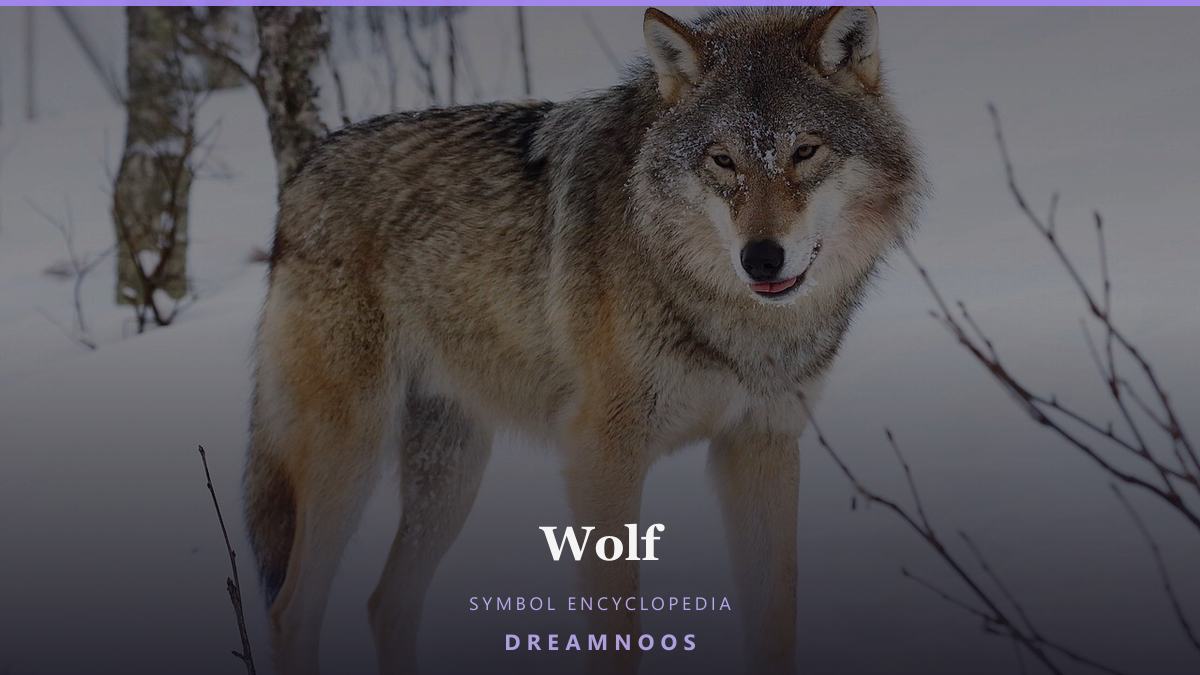
Wolf
Wolf symbolism in dreams — pack, instinct, threat, loyalty, and the wild edge of belonging.
Wolves split the cultural imagination — villain of fairy tales, sacred kin in some Indigenous traditions, meme for lone independence. Dreams use wolves for instinct with teeth: loyalty that hunts, or threat at the tree line.
Classical layers
Pack and belonging. Hierarchy, exile, alpha conflict — social maps in animal form.
Predator threat. Chase dreams with wolves merge chase grammar.
Transformation. Werewolf lore adds identity rupture — civilized by day, appetite by night.
Reading checklist
Lone or pack? Friendly approach or snarl? You as wolf or observer? Forest or city edge?
Cross-tradition caution
Respect living cultures’ wolf symbolism — avoid flattening sacred meanings into generic “spirit animal” slogans.
Further reading
Why wolf dreams. Moon tarot. Scorpio resonance optional.
Wolves ask which hunger you run with — or from.
Hunger, pack, and the edge of the settlement
The wolf occupies a specific position in the symbolic landscape: it is the predator that lives just outside where people live. Not remote wilderness, not domestic space, but the treeline at the edge of the village. That liminal position generates most of the readings.
Hunger. The wolf is the standard image for appetite that is not satisfied and does not stop — ambition, craving, need, or want that the dreamer experiences as larger than they are comfortable with. Where a dream emphasises the animal being starved or relentless, this is the live layer, and the interpretive question is whose hunger it is.
The pack. Wolves hunt in coordinated groups, and dreams featuring several introduce a social dimension the solitary predators lack. Pack dreams tend to concern groups that operate by rules the dreamer either belongs to or is excluded from — workplaces, families, peer networks. Being pursued by a pack reads differently from running with one, and dreamers who report the latter usually describe it as exhilarating rather than frightening.
The lone wolf inverts this and belongs to the vocabulary of separation from the group — chosen or imposed.
Domestication. The wolf is the ancestor of the dog, and dreams sometimes trade between them. A wolf that behaves like a dog, or a dog that turns out to be a wolf, is one of the more pointed images available: something bonded revealing itself as wild, or something wild proving approachable.
Folklore and its residue
European folklore assigned the wolf the role of deceiver and devourer — the wolf at the door, the wolf in the fold, the wolf in disguise — and that residue shows up in dreams as the sense of threat concealed by familiarity. Other traditions, including a number of Indigenous North American ones, treat the animal as teacher, guide, or kin, and dreamers from those frames report correspondingly different dreams.
DreamNoos does not privilege either. What is durable across both is the association with instinct that has not been tamed — which can read as danger or as vitality depending on the dreamer’s relationship to their own.
How to read a wolf-coded dream
1. One or many? The pack dimension is the most distinctive feature of this symbol.
2. Are you hunted, or among them? These are opposite dreams with the same animal.
3. Is it hungry? Emaciation and relentlessness push the reading toward appetite.
4. Where is it? Wilderness, treeline, or inside human space — proximity to the settlement matters in this symbol more than in most.
5. Does it behave like a dog? Any blurring between wolf and dog is usually the dream’s central statement.
Recurring wolf dreams
Where the animal returns across months, the interpretive tradition points at something the dreamer has not decided how to relate to. Wolves rarely recur as neutral scenery. The repetition tends to accompany an appetite, an ambition, or a form of anger that the dreamer has neither integrated nor let go of — kept at the treeline, in effect, which is exactly where the animal lives.
Dreamers who report a shift in these dreams — the wolf coming closer, becoming less frightening, or eventually being approached — generally describe a corresponding change in waking life, usually the point at which they stopped treating the drive in question as something to be suppressed.
What this hub aggregates
The DreamNoos wolf hub collects dream topics turning on wolves singly and in packs — including being hunted, running with a pack, lone wolves, and dreams where the boundary between wolf and dog blurs. For pursuit scenarios the chase vocabulary carries most of the reading; for the wider predator field see lion and bear. Sideways this hub points to the fear theme and to the anger emotion, where hunger imagery most often lands.
Real-world reference: Wolf on Wikipedia — for the literal, non-symbolic background on wolf.
Explore Wolf beyond dreams
This symbol hub covers dream interpretation. You can also explore wolf through tarot, astrology, and angel numbers — reflective lenses, not competing truths.
Related tarot cards
Related zodiac signs
Angel numbers
Describe your dream in the interpreter — try keywords like wolf pack howl
Dreams featuring wolf
- Chased by a Big Wolf in a Dream Chased by a Big Wolf in a Dream: what this dream usually means — magnitude layered over wolf symbolism, with psychological and classical readings.
- Big Wolf Attack in a Dream Big Wolf Attack in a Dream: what this dream usually means — magnitude layered over wolf symbolism, with psychological and classical readings.
- Big Wolf in a Dream Big Wolf dreams show wolf appears at enlarged scale—pack loyalty and wild boundary under big, with witness, rescue, or release scenes.
- Chased by a Black Wolf in a Dream Chased by a Black Wolf in a Dream: what this dream usually means — the unknown layered over wolf symbolism, with psychological and classical readings.
- Black Wolf Attack in a Dream Black Wolf Attack in a Dream: what this dream usually means — the unknown layered over wolf symbolism, with psychological and classical readings.
- Black Wolf in a Dream Black Wolf dreams show wolf appears in shadow tone—pack loyalty and wild boundary under black, with witness, rescue, or release scenes.
- Chased by a Blue Wolf in a Dream Chased by a Blue Wolf in a Dream: what this dream usually means — distance and calm layered over wolf symbolism, with psychological and classical readings.
- Blue Wolf Attack in a Dream Blue Wolf Attack in a Dream: what this dream usually means — distance and calm layered over wolf symbolism, with psychological and classical readings.
- Blue Wolf in a Dream Blue Wolf dreams show wolf holds cool distance tone—pack loyalty and wild boundary under blue, with witness, rescue, or release scenes.
- A Wolf Attack That Breaks Bones in a Dream A Wolf Attack That Breaks Bones: what this dream usually means — lost function layered over wolf symbolism, with psychological and classical readings.
- Broken Wolf in a Dream Broken Wolf dreams show wolf fractures without ending—pack loyalty and wild boundary under broken, with witness, rescue, or release scenes.
- Chased by a Burning Wolf in a Dream Chased by a Burning Wolf in a Dream: what this dream usually means — consuming intensity layered over wolf symbolism, with psychological and classical readings.
- A Wolf Attack Amid Fire in a Dream A Wolf Attack Amid Fire: what this dream usually means — consuming intensity layered over wolf symbolism, with psychological and classical readings.
- Burning Wolf in a Dream Burning Wolf dreams show wolf consumes in crisis—pack loyalty and wild boundary under burning, with witness, rescue, or release scenes.
- Chased by a Clean Wolf in a Dream Chased by a Clean Wolf in a Dream: what this dream usually means — order and integrity layered over wolf symbolism, with psychological and classical readings.
- A Clean Escape from a Wolf Attack in a Dream A Clean Escape from a Wolf Attack: what this dream usually means — order and integrity layered over wolf symbolism, with psychological and classical readings.
- Clean Wolf in a Dream Clean Wolf dreams show wolf shows purified reset—pack loyalty and wild boundary under clean, with witness, rescue, or release scenes.
- Chased by a Crying Wolf in a Dream Chased by a Crying Wolf in a Dream: what this dream usually means — grief surfacing layered over wolf symbolism, with psychological and classical readings.
- Crying During a Wolf Attack Dream Crying During a Wolf Attack Dream: what this dream usually means — grief surfacing layered over wolf symbolism, with psychological and classical readings.
- Crying Wolf in a Dream Crying Wolf dreams show wolf grieves audibly—pack loyalty and wild boundary under crying, with witness, rescue, or release scenes.
- Chased by a Dead Wolf in a Dream Chased by a Dead Wolf in a Dream: what this dream usually means — finality layered over wolf symbolism, with psychological and classical readings.
- Attacked by a Dead Wolf in a Dream Attacked by a Dead Wolf in a Dream: what this dream usually means — finality layered over wolf symbolism, with psychological and classical readings.
- Chased by a Dirty Wolf in a Dream Chased by a Dirty Wolf in a Dream: what this dream usually means — contamination layered over wolf symbolism, with psychological and classical readings.
- A Filthy Wolf Attacking You in a Dream A Filthy Wolf Attacking You in a Dream: what this dream usually means — contamination layered over wolf symbolism, with psychological and classical readings.
- Dirty Wolf in a Dream Dirty Wolf dreams show wolf shows soiled or stained layer—pack loyalty and wild boundary under dirty, with witness, rescue, or release scenes.
- Chased by a Dying Wolf in a Dream Chased by a Dying Wolf in a Dream: what this dream usually means — transition in progress layered over wolf symbolism, with psychological and classical readings.
- Dying in a Wolf Attack Dream Dying in a Wolf Attack Dream: what this dream usually means — transition in progress layered over wolf symbolism, with psychological and classical readings.
- Dying Wolf in a Dream Dying-wolf dreams hold wild instinct in the fade—lone power weakening, pack edge still breathing, boundary guardian thinning before stillness, or fierce autonomy you cup while the howl goes quiet.
- Falling While Chased by a Wolf in a Dream Falling While Chased by a Wolf: what this dream usually means — lost support layered over wolf symbolism, with psychological and classical readings.
- Falling During a Wolf Attack in a Dream Falling During a Wolf Attack: what this dream usually means — lost support layered over wolf symbolism, with psychological and classical readings.
- Falling Wolf in a Dream Falling Wolf dreams show wolf drops from height—pack loyalty and wild boundary under falling, with witness, rescue, or release scenes.
- Chased by a Flying Wolf in a Dream Chased by a Flying Wolf in a Dream: what this dream usually means — escape and perspective layered over wolf symbolism, with psychological and classical readings.
- Attacked by a Flying Wolf in a Dream Attacked by a Flying Wolf in a Dream: what this dream usually means — escape and perspective layered over wolf symbolism, with psychological and classical readings.
- Flying Wolf in a Dream Flying Wolf dreams show wolf rises off the ground—pack loyalty and wild boundary under flying, with witness, rescue, or release scenes.
- Chased by a Golden Wolf in a Dream Chased by a Golden Wolf in a Dream: what this dream usually means — idealisation layered over wolf symbolism, with psychological and classical readings.
- Golden Wolf Attack in a Dream Golden Wolf Attack in a Dream: what this dream usually means — idealisation layered over wolf symbolism, with psychological and classical readings.
- Golden Wolf in a Dream Golden Wolf dreams show wolf shines as valued ideal—pack loyalty and wild boundary under golden, with witness, rescue, or release scenes.
- Chased by a Green Wolf in a Dream Chased by a Green Wolf in a Dream: what this dream usually means — growth and renewal layered over wolf symbolism, with psychological and classical readings.
- Green Wolf Attack in a Dream Green Wolf Attack in a Dream: what this dream usually means — growth and renewal layered over wolf symbolism, with psychological and classical readings.
- Green Wolf in a Dream Green Wolf dreams show wolf carries living growth tone—pack loyalty and wild boundary under green, with witness, rescue, or release scenes.
- Chased by a Wolf While Lost in a Dream Chased by a Wolf While Lost: what this dream usually means — disorientation layered over wolf symbolism, with psychological and classical readings.
- A Wolf Attack While Lost in a Dream A Wolf Attack While Lost: what this dream usually means — disorientation layered over wolf symbolism, with psychological and classical readings.
- Lost Wolf in a Dream Lost Wolf dreams show wolf misplaced but may return—pack loyalty and wild boundary under lost, with witness, rescue, or release scenes.
- Chased by a Pregnant Wolf in a Dream Chased by a Pregnant Wolf in a Dream: what this dream usually means — potential forming layered over wolf symbolism, with psychological and classical readings.
- Dreaming of a Wolf Attack While Pregnant Dreaming of a Wolf Attack While Pregnant: what this dream usually means — potential forming layered over wolf symbolism, with psychological and classical readings.
- Pregnant Wolf in a Dream Pregnant Wolf dreams show wolf swells before release—pack loyalty and wild boundary under pregnant, with witness, rescue, or release scenes.
- Chased by a Red Wolf in a Dream Chased by a Red Wolf in a Dream: what this dream usually means — urgency layered over wolf symbolism, with psychological and classical readings.
- Red Wolf Attack in a Dream Red Wolf Attack in a Dream: what this dream usually means — urgency layered over wolf symbolism, with psychological and classical readings.
- Red Wolf in a Dream Red Wolf dreams show wolf shows urgent vivid tone—pack loyalty and wild boundary under red, with witness, rescue, or release scenes.
- Running Away from a Wolf in a Dream Running Away from a Wolf in a Dream: what this dream usually means — momentum layered over wolf symbolism, with psychological and classical readings.
- Running from a Wolf Attack in a Dream Running from a Wolf Attack: what this dream usually means — momentum layered over wolf symbolism, with psychological and classical readings.
- Running Wolf in a Dream Running Wolf dreams show wolf moves under pressure—pack loyalty and wild boundary under running, with witness, rescue, or release scenes.
- Chased by a Silver Wolf in a Dream Chased by a Silver Wolf in a Dream: what this dream usually means — quiet value layered over wolf symbolism, with psychological and classical readings.
- Silver Wolf Attack in a Dream Silver Wolf Attack in a Dream: what this dream usually means — quiet value layered over wolf symbolism, with psychological and classical readings.
- Silver Wolf in a Dream Silver Wolf dreams show wolf reflects as secondary tone—pack loyalty and wild boundary under silver, with witness, rescue, or release scenes.
- Chased by a Small Wolf in a Dream Chased by a Small Wolf in a Dream: what this dream usually means — reduction layered over wolf symbolism, with psychological and classical readings.
- Small Wolf Attack in a Dream Small Wolf Attack in a Dream: what this dream usually means — reduction layered over wolf symbolism, with psychological and classical readings.
- Small Wolf in a Dream Small Wolf dreams show wolf appears at reduced scale—pack loyalty and wild boundary under small, with witness, rescue, or release scenes.
- Chased by a White Wolf in a Dream Chased by a White Wolf in a Dream: what this dream usually means — clarity and exposure layered over wolf symbolism, with psychological and classical readings.
- White Wolf Attack in a Dream White Wolf Attack in a Dream: what this dream usually means — clarity and exposure layered over wolf symbolism, with psychological and classical readings.
- White Wolf in a Dream White Wolf dreams show wolf appears in pale clarity—pack loyalty and wild boundary under white, with witness, rescue, or release scenes.
- Chased by a Yellow Wolf in a Dream Chased by a Yellow Wolf in a Dream: what this dream usually means — caution layered over wolf symbolism, with psychological and classical readings.
- Yellow Wolf Attack in a Dream Yellow Wolf Attack in a Dream: what this dream usually means — caution layered over wolf symbolism, with psychological and classical readings.
- Yellow Wolf in a Dream Yellow Wolf dreams show wolf glows with bright caution—pack loyalty and wild boundary under yellow, with witness, rescue, or release scenes.
- Bleeding Wolf in a Dream Bleeding Wolf dreams show wolf wounds in plain sight—pack loyalty and wild boundary under bleeding, with witness, rescue, or release scenes.
- Dead Wolf in a Dream Dead-wolf dreams hold the silence after pursuit—roadside stillness, guilt after the shot, pack without its alpha, or wild instinct you buried and now miss.
- Chased by Wolf in a Dream A focused interpretation of being chased by wolf dreams through avoidance patterns, fear escalation, and delayed confrontation.
- Wolf Attack in a Dream A strategic interpretation of wolf attack dreams through social threat, instinctive defense, betrayal risk, and boundary enforcement.
- Wolf in a Dream Wolf dreams split between pack threat and lone instinct—hidden enemy, wild teacher, or the part of you that refuses to stay domesticated.
Share Your Dream Experience
Had a similar dream? Share your experience or ask a question — comments appear after moderation.
No comments yet. Be the first to share your experience.