The Right to Repair: Can Europe Change Consumer Culture?
Europe's right-to-repair rules are now applying. Discover what they mean for consumers, manufacturers, repair shops and the future of electronic waste.
The Right to Repair: Can Europe Change Consumer Culture?
For years, a familiar situation has played out in homes around the world. A smartphone develops a battery problem. A washing machine stops working. A laptop becomes unreliable because of one inexpensive component.
The owner asks a practical question: Is it worth repairing?
Too often, the answer is no. Spare parts are difficult to obtain, repair services are expensive, software restrictions complicate independent work, or replacing the entire product appears easier than fixing it.
This is not simply a matter of consumer preference. It reflects how modern products are designed, sold and maintained.
On July 31, 2026, a significant change began applying across the European Union. Member states were required to apply national rules implementing the EU’s Right to Repair Directive, designed to make repairs more accessible and attractive to consumers.
The legislation represents an important shift in the relationship between manufacturers and customers. But its real test will not be the wording of the law. It will be whether ordinary people find it easier, cheaper and more practical to keep their possessions working.
Why repairing a product became so difficult
The modern consumer economy is exceptionally good at making new products available. It is less successful at ensuring that existing products remain useful.
A broken device can be difficult to repair for several reasons.
Some products use components that are glued together rather than secured with removable screws. Others require specialized tools or software that independent repair shops cannot easily access. In certain cases, a replacement component may be available, but its price makes the repair economically unattractive.
The problem is not always deliberate design. Manufacturers have legitimate reasons to prioritize water resistance, compact dimensions, safety, manufacturing efficiency and product performance. A sealed smartphone, for example, can be thinner and more resistant to water than some easily opened alternatives.
However, design decisions have consequences beyond the factory.
When a battery is difficult to replace, the useful life of an otherwise functional device may end prematurely. When a washing machine’s electronic control board is unavailable, a relatively small failure can turn an expensive appliance into waste.
The result is a system in which the replacement market can become more convenient than the repair market.
That convenience has a cost: new materials, additional manufacturing, transportation, packaging and discarded products.
What Europe’s Right to Repair rules actually change
The EU adopted Directive (EU) 2024/1799 on June 13, 2024. Member states were required to transpose the directive into national law by July 31, 2026, and apply the resulting measures from that date.
The directive aims to strengthen consumer rights and encourage repair both within and outside the seller’s legal guarantee period.
One important distinction matters: the directive does not create an unlimited obligation to repair every product that breaks. Its specific manufacturer repair obligation applies to product categories for which EU legislation establishes repairability requirements.
These include certain household appliances and electronic products, such as washing machines, dishwashers, refrigeration equipment, electronic displays, vacuum cleaners, mobile phones and tablets. The relevant product rules determine the precise scope.
For products covered by the obligation, manufacturers must provide repair under the conditions established by the directive and applicable product legislation.
The framework also introduces several measures intended to make repair a more realistic option:
- Access to repair information: Consumers should be able to find information about repair services and relevant conditions more easily.
- Availability of spare parts: Manufacturers covered by the rules must make required spare parts and related information available under the applicable conditions.
- More attractive repair choices: When a consumer chooses repair instead of replacement during the seller’s liability period, the legal guarantee is extended by at least 12 months under the directive’s amended rules.
- A European repair platform: An EU-level online platform is planned to help consumers find repair services, with the Commission indicating that it should become operational in 2027.
These provisions are meaningful, but they should not be confused with a guarantee that every repair will be free or that every manufacturer must repair every product indefinitely.
The distinction between a manufacturer’s repair obligation and a seller’s existing legal guarantee is particularly important. Consumers should check which rules apply to their specific product, purchase date and country.
The economic question: Is repair actually cheaper?
The success of repair legislation will ultimately depend on economics.
Imagine a household appliance that originally cost €500. After several years, its motor fails. A replacement motor costs €90, but diagnosis, labor, transportation and installation bring the total repair bill to €220.
A replacement appliance might cost €350.
Even if repairing the original product is environmentally preferable, the household may struggle to justify spending €220 on an older machine with an uncertain remaining lifespan.
This is where repair policy encounters its most difficult obstacle.
A legal right does not automatically create an affordable service. It cannot, by itself, reduce every technician’s labor costs, make every replacement component inexpensive or guarantee that a repaired device will operate reliably for another five years.
There are also differences between product categories. Replacing a smartphone battery can be relatively straightforward. Repairing a complex television panel or a damaged appliance control system may be much more expensive.
For consumers, the relevant calculation is not simply the cost of a spare part. It is the total cost of repair compared with the expected value and remaining useful life of the product.
A genuinely effective repair economy needs transparent prices, predictable access to parts, skilled technicians and products designed to be serviced.
Without these conditions, the right to repair risks becoming a right that exists more clearly in legislation than in everyday life.
Why manufacturers may need to rethink product design
Repairability is not just a question for customer service departments. It begins long before a product reaches a shop.
Manufacturers decide whether batteries can be replaced, whether components can be accessed without damage, how long software support will continue and whether spare parts will remain available.
These decisions influence how long a product remains useful.
A design that makes a battery replaceable may add a small amount of engineering complexity. But it can also prevent an otherwise functional device from being discarded because its battery has deteriorated.
Likewise, modular components can allow a technician to replace a failed part rather than an entire assembly.
There are trade-offs. Modular designs may require additional space, affect manufacturing costs or create engineering challenges. A repairable product is not automatically the best product in every technical category.
The more important principle is that repairability should be considered alongside durability, safety, performance and manufacturing efficiency"not treated as an afterthought.
This could gradually change how consumers compare products. Instead of asking only about screen quality, processing power or energy efficiency, buyers may increasingly ask how long a product will receive software updates, whether its battery can be replaced and how much common repairs cost.
Independent repair shops could become more important
The repair economy is not limited to manufacturers and large service networks.
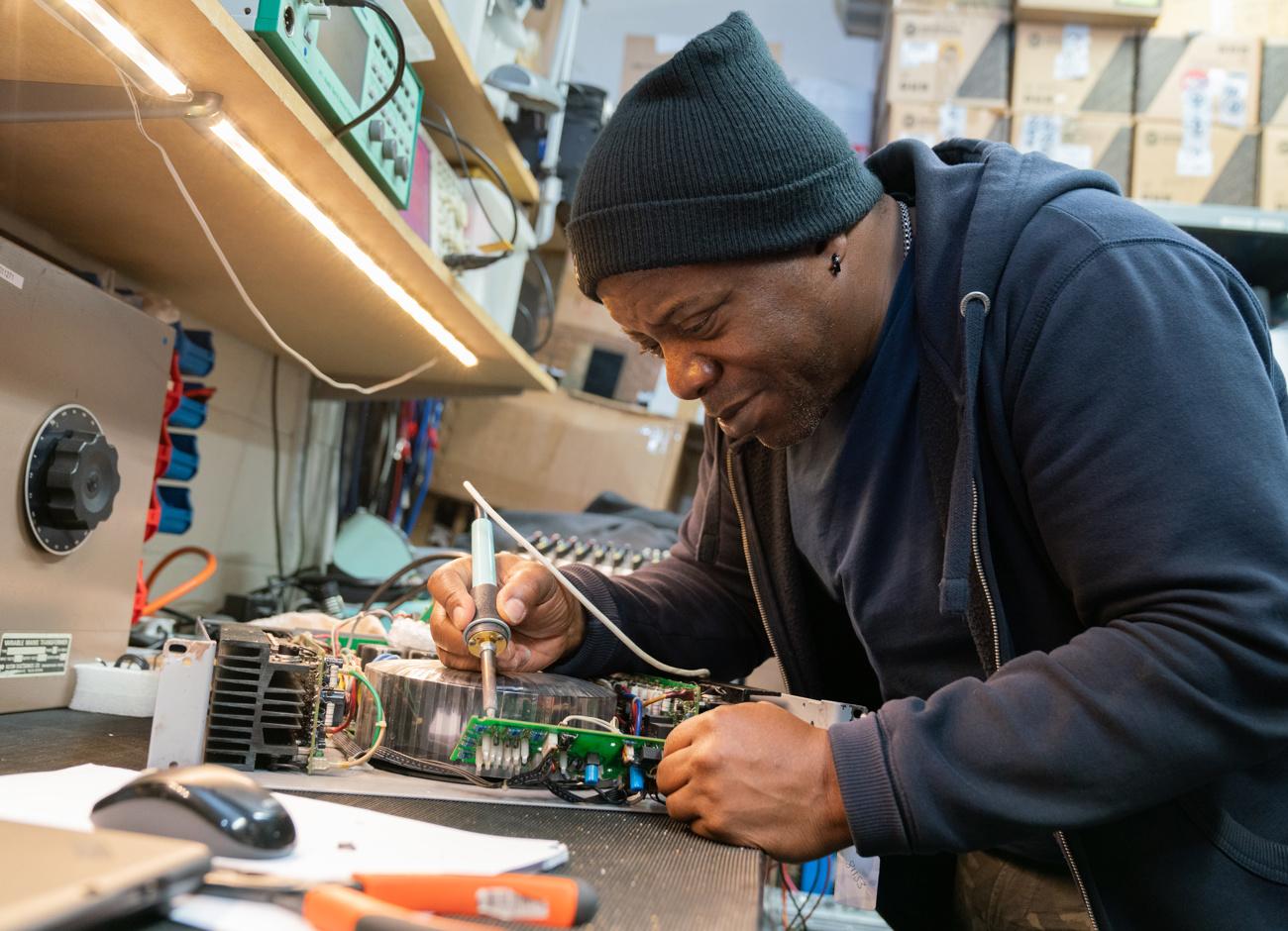
Independent technicians are often the people who keep older electronics and household appliances in use. They understand local product conditions, work with different brands and may be able to offer services at prices that are more accessible than official replacement programs.
Yet independent repair businesses can face significant barriers.
They need access to technical documentation, diagnostic tools and reliable spare parts. They also need to compete with products that are sometimes designed in ways that make disassembly difficult or risky.
Better access to repair information and parts could strengthen this sector. It may also create opportunities for specialized businesses focused on refurbished electronics, component recovery and maintenance.
But growth is not guaranteed. Independent repairers will still need to meet safety requirements, maintain quality standards and manage liability when a repair fails.
There is a broader employment question here, too. A market that values maintenance and repair can support skilled local work rather than concentrating economic activity entirely around the sale of new products.
That is one of the less visible potential benefits of a stronger repair culture.
The environmental argument is more complicated than it sounds
Repair is often presented as an obvious environmental win. In many cases, it is"but the details matter.
Manufacturing a new smartphone, laptop or household appliance requires materials, energy and transportation. Extending the useful life of an existing product can reduce the need for another manufacturing cycle.
However, the environmental benefit depends on what is repaired, how it is repaired and how long the repair extends the product’s useful life.
A repair that lasts only a few months may have limited value if the product must soon be replaced anyway. A replacement component that requires substantial new material and transportation also has an environmental footprint.
There are cases where a new, significantly more energy-efficient appliance may use less electricity over its lifetime than an old, inefficient model. In those situations, the decision should consider both manufacturing impacts and the energy consumed during use.
The correct comparison is therefore not simply “repair good, replacement bad.”
It is a lifecycle question.
How much environmental impact is avoided by keeping the original product in service? How long will it remain reliable? What resources are needed for the repair? What happens to the product if it is not repaired?
A credible circular economy must answer these questions rather than rely on attractive slogans.
What consumers should look for before buying their next device
The right to repair can improve the conditions surrounding repair, but consumers also influence the market through purchasing decisions.
A few practical questions can reveal whether a product is likely to remain useful over time:
Can the battery or other common wear components be replaced?
Batteries, seals, filters and moving components can determine the useful life of many products. Replacement access matters.
Are spare parts available at reasonable prices?
A product may be technically repairable but economically impractical if its replacement parts are expensive or difficult to obtain.
How long will software support continue?
For connected devices, physical durability is not enough. A smartphone or smart appliance can become less useful if essential software and security updates end prematurely.
Is there a repair network nearby?
A repairable product is less convenient to maintain if the nearest qualified service provider is hundreds of kilometers away.
What does a typical repair cost?
A transparent estimate of common repairs can be more useful than a general marketing claim about durability.
These questions are relevant beyond Europe. Even where specific legal protections differ, the underlying purchasing logic remains the same.
The uncomfortable question: Who benefits when products cannot be repaired?
There is a commercial tension at the heart of the repair debate.
A company that sells a replacement product may benefit when an older device becomes difficult or expensive to repair. A company that provides long-term maintenance, replacement parts and refurbishment services may benefit when products remain in use.
Neither business model is automatically more profitable in every situation. Manufacturers have to balance production costs, warranties, safety, product innovation and customer expectations.
But the incentives are not neutral.
If a product is difficult to repair, the customer may have little practical choice except replacement. If it is easy to repair, the customer may keep it longer and spend money on maintenance instead.
This changes the relationship between a company and its customers.
The most sustainable business model is not necessarily one that sells the fewest products. It may be one that earns trust through durable products, reliable service and a continuing relationship with the customer.
That model requires a longer commercial horizon than the traditional cycle of launch, purchase, failure and replacement.
The real challenge for manufacturers is to demonstrate that durability and repairability can be part of a successful business strategy rather than simply an additional regulatory cost.
A European rule with consequences beyond Europe
The EU’s Right to Repair Directive is European legislation, not a universal consumer right. Its direct legal effects depend on EU membership, national implementation and the products covered by the relevant rules.
Nevertheless, large manufacturers often operate across international markets. Changes in product design, spare-part logistics and repair services in one major market can influence decisions elsewhere.
This does not mean that every country will automatically receive the same protections. Nor does it guarantee that manufacturers will adopt identical repair policies worldwide.
But the European framework adds pressure to a wider debate about product longevity, electronic waste and consumer choice.
The planned European repair platform, expected in 2027, could also make it easier to compare services and locate repair providers. Its practical usefulness will depend on the quality of national participation and the information available to consumers.
For now, the legislation should be understood as a starting point rather than a completed transformation.
The future of ownership may depend on what happens after the sale
For much of the modern consumer era, product ownership has been measured by the moment of purchase. A customer buys a device, uses it and eventually replaces it.
A repair-oriented economy asks a different question: What responsibilities and services should continue after the sale?
The answer involves manufacturers, retailers, regulators, independent repair businesses and consumers. No single group can create a functioning repair ecosystem alone.
Europe’s new rules are an important attempt to change the incentives. Their success will depend on whether spare parts become accessible, repair prices remain reasonable, technicians can do their jobs and manufacturers design products with maintenance in mind.
There is also a cultural shift to consider. Repairing something should not feel like an outdated or inconvenient alternative to buying something new. It should be a normal, practical choice.
The most meaningful measure of the right to repair will not be how many pages of legislation are published. It will be how many products remain useful because repairing them finally makes sense.
Sources and Further Reading
- European Commission " Right to Repair: New consumer rights for easy and attractive repairs (31 July 2026)
- European Commission " Directive on repair of goods
- EUR-Lex " Directive (EU) 2024/1799: Common rules promoting the repair of goods
- Council of the European Union " Right to repair products
Editorial note: This article explains the EU framework as of November 16, 2026. It is not legal advice. The precise rights available to consumers depend on national implementing legislation, the product category and the circumstances of the purchase and repair.