The Hidden Cost of Artificial Light: How Bright Nights Are Changing Wildlife
Artificial light is changing how wildlife feeds, migrates and reproduces. New research reveals why protecting natural darkness matters.
The Hidden Cost of Artificial Light: How Bright Nights Are Changing Wildlife
For much of Earth’s history, darkness was not an absence of activity. It was a signal.
When the Sun disappeared below the horizon, nocturnal animals began to forage, insects emerged, predators changed their hunting patterns and countless organisms followed rhythms shaped by the rotation of the planet. Darkness helped determine when animals moved, where they searched for food and how they interacted with one another.
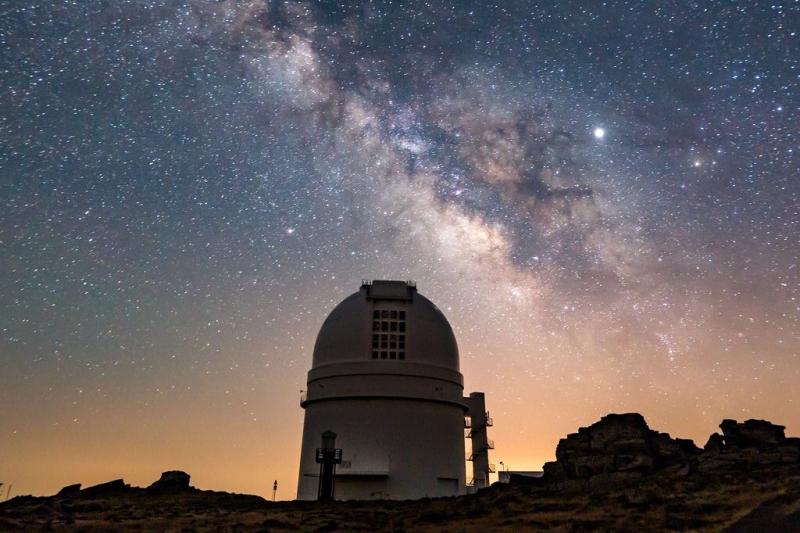
That natural cycle is becoming increasingly difficult to find.
Streetlights, illuminated buildings, industrial facilities, advertising screens and expanding urban infrastructure have transformed the night environment. Even places far from major cities can experience artificial skyglow: the diffuse brightness created when outdoor lighting scatters through the atmosphere.
The consequences extend well beyond the disappearance of a clear view of the stars. Artificial light at night can influence animal navigation, feeding, communication, reproduction and the relationships connecting species within ecosystems.
New research published in 2026 is helping scientists understand why the problem deserves more attention. It also reveals an important complication: light pollution does not affect every species in the same way, and reducing it requires more than simply switching off every light.
A changing environment after sunset
Artificial light at night, commonly abbreviated as ALAN, describes human-generated illumination that changes the natural lighting conditions after sunset.
It includes obvious sources such as streetlights and illuminated sports facilities, but also less noticeable contributions from residential windows, commercial buildings, transport infrastructure and outdoor decorative lighting.
The expansion of artificial lighting has brought substantial benefits. It allows people to travel, work, study and use public spaces after dark. Properly designed lighting can improve visibility and support essential activities.
The environmental problem begins when illumination is excessive, poorly directed, unnecessarily bright or maintained when it is not needed.
Light that escapes upwards can brighten the night sky over large areas. Light directed horizontally can spill into nearby habitats, while intense illumination close to rivers, coastlines, forests and wetlands can alter conditions for wildlife.
This is why light pollution is not simply an urban aesthetic issue. It is an environmental pressure that can cross the boundaries between built-up areas and natural ecosystems.
A 2026 review published in Nature Reviews Biodiversity describes ecological light pollution as a rapidly expanding but insufficiently regulated form of environmental change. The authors examine effects ranging from individual biological processes to wider ecosystem relationships and identify significant gaps in how scientific evidence is reflected in lighting policy.
The central challenge is straightforward: modern societies have become very good at producing light, but much less successful at deciding where, when and how much of it is actually necessary.
Why darkness matters to animals
Many animals use light as information.
The changing intensity of daylight helps organisms coordinate internal biological clocks. The length of the night can provide seasonal information, while the position of the Moon and stars can help some species navigate.
Artificial illumination can interfere with these signals in several ways.
Insects drawn towards artificial lights
One of the most visible examples is the attraction of flying insects to lamps.
Moths, beetles and other insects may circle artificial light sources, repeatedly approach illuminated surfaces or change their normal flight patterns. The exact mechanisms vary between species and are still being investigated.
The consequences can include increased exposure to predators, exhaustion, disrupted feeding and reduced opportunities to find mates.
However, the ecological significance extends beyond individual insects.
Many insects contribute to pollination, decomposition and nutrient cycling. If artificial lighting changes where and when they move, it can also affect interactions between plants, insects and other animals.
Research on light pollution has increasingly moved beyond asking why insects gather around lamps. Scientists are now examining how illumination changes entire ecological relationships.
Birds navigating an illuminated world
Birds provide another important example.
Many migratory species travel at night, using environmental cues to maintain direction. Artificial lighting can attract or disorient some birds, particularly around brightly illuminated buildings and structures.
In certain circumstances, birds may circle illuminated areas, collide with buildings or become separated from their normal migration routes.
The effects are not identical across species. Migration strategy, weather, age, visual sensitivity and the surrounding landscape can all influence the outcome.
Artificial light can also alter the timing of daily activity. Some birds begin singing earlier in the morning or change their normal activity patterns in illuminated environments.
A 2026 meta-analysis examining 675 effect sizes from 36 studies found consistent changes in avian physiology and behaviour under artificial night lighting. The researchers reported patterns including reduced sleep, increased metabolic rate and accelerated reproductive maturation.
Importantly, the same analysis did not find corresponding effects across every life-history measure examined. This distinction matters: evidence of a physiological or behavioural response does not automatically establish a population decline.
It does, however, show why researchers increasingly consider artificial light a meaningful environmental exposure rather than a minor inconvenience.
Bats, predators and disrupted feeding patterns
For bats, the relationship with artificial light is particularly complex.
Some species avoid illuminated areas, potentially losing access to feeding routes and suitable habitat. Others may exploit concentrations of insects around lamps.
At first glance, the second response might appear beneficial. A bat that finds more insects near a streetlight may have access to an additional food source.
But this does not mean that artificial lighting benefits bats as a group.
Species that avoid bright environments may experience habitat fragmentation, while those that tolerate illumination can face different risks. The distribution of food, predators and competitors may also change.
A landscape can therefore become more favourable to certain species while becoming less suitable for others.
This uneven response is one reason why environmental lighting policies need to consider local wildlife rather than assume that every species reacts in the same way.
The overlooked combination: light and noise
A particularly important development in 2026 is the growing recognition that environmental pressures rarely operate independently.
A road, industrial facility or commercial district may generate both artificial light and continuous noise. Wildlife living nearby is exposed to a combination of sensory disturbances rather than one isolated factor.
A study published on October 29, 2026, in Biodiversity and Conservation examined the interactive effects of artificial light and human-generated noise.
The researchers identified 30 relevant studies, with 16 contributing 151 effect sizes to their meta-analysis. The evidence primarily covered birds, amphibians and insects.
The findings showed that combined exposure could produce responses different from those expected by simply adding the effects of light and noise.
In amphibians, the combined pressures were predominantly synergistic, meaning that negative responses could be amplified. In insects, some interactions were antagonistic, indicating that the combined response could be weaker than the sum of the individual effects.
These findings should not be interpreted as proof that every illuminated and noisy habitat experiences the same outcome. The evidence base remains limited, and the researchers emphasised the need for more detailed investigation.
Nevertheless, the study points towards a broader lesson for conservation.
A wildlife corridor beside a busy, illuminated road cannot be evaluated only by measuring its vegetation or physical size. Its sensory environment may also determine whether animals can use it effectively.
Protecting habitat increasingly means protecting the conditions that make habitat functional.
Why even dim light can matter
One assumption about light pollution is that only very bright sources create meaningful ecological problems.
Research published in 2026 challenges that simplified view.
A study in Biological Conservation examined 15 datasets covering different biological groups and ecological processes. Its analysis found that biological responses could rise sharply at very low levels of artificial illumination, with substantial changes occurring below one lux in the datasets examined.
Lux is a measurement of illuminance: the amount of light falling on a surface.
The finding does not establish one universal threshold for every animal, plant or ecosystem. Different organisms have different sensitivities, and the response also depends on exposure duration, wavelength, natural background conditions and other environmental factors.
But it highlights a crucial issue.
A location does not need to resemble a brightly illuminated city centre to experience ecological light pollution. Diffuse skyglow and light spilling from distant infrastructure can change the natural darkness of an otherwise quiet landscape.
This makes the problem harder to manage through simple visual inspection. A place may appear dark to a person while still experiencing altered nighttime lighting conditions.
Can cities become brighter and more environmentally responsible?
The answer is not to abandon public lighting.
Roads, pedestrian routes, workplaces and public spaces still require appropriate illumination. The challenge is to provide the light people genuinely need while limiting unnecessary exposure to surrounding environments.
Researchers and environmental planners increasingly discuss several practical approaches.
Direct light towards the ground
Outdoor fixtures should illuminate the intended surface rather than send unnecessary light into the sky or neighbouring habitats.
Shielded lighting can reduce upward emissions and limit light spilling beyond the area where it is required.
The design of the fixture matters as much as its brightness.
Reduce intensity where possible
More illumination does not automatically produce better visibility or safer streets.
Lighting levels should be appropriate for the actual use of a location. Residential streets, pedestrian paths, industrial sites and major roads have different requirements.
Reducing excessive brightness can also lower electricity consumption.
Use lighting only when needed
Motion sensors, adaptive controls and scheduled dimming can help reduce unnecessary illumination.
A pathway used frequently during the evening may need a different lighting strategy from an industrial area that remains largely inactive overnight.
However, the ecological consequences of dimming and switching off lights are not yet equally well understood across all species and habitats. The timing and design of interventions should therefore be evaluated rather than assumed to be beneficial in every situation.
Consider colour and spectrum
Not all artificial light has the same spectral composition.
The wavelength distribution of a light source can influence how organisms perceive it and how strongly it affects their behaviour and physiology.
Choosing lighting with a more suitable spectrum may reduce certain ecological impacts, although no single colour temperature should be treated as universally harmless.
The appropriate choice depends on the species, habitat and purpose of the lighting.
Protect sensitive natural areas
Wetlands, coastlines, forests, migration corridors and protected habitats deserve particular attention.
Lighting plans should consider not only the immediate installation site but also nearby ecological connections.
A single illuminated road or bridge can become a barrier for animals that avoid bright environments.
The economic argument for better lighting
Environmental protection is not the only reason to rethink outdoor illumination.
Unnecessary lighting consumes electricity, requires infrastructure and creates maintenance costs. Directing light more efficiently can reduce energy demand while maintaining the visibility needed for public activities.
There is also a planning advantage.
Cities that integrate lighting considerations into transport, architecture and landscape design may avoid expensive retrofits later.
The challenge is to distinguish useful illumination from waste.
A brightly illuminated building façade may provide visual appeal, but its environmental value should be weighed against energy use and light spilling into nearby habitats. A streetlight that remains at full intensity on an empty pathway throughout the night may not be the most efficient solution.
Good lighting design is not about maximising brightness. It is about matching illumination to a real purpose.
What scientists still do not know
Despite growing research interest, important uncertainties remain.
The 2026 review in Nature Reviews Biodiversity highlights weaknesses in standardised measurement, long-term monitoring and the ability to predict responses across different species and ecosystems.
Much of the available research focuses on behavioural changes or short-term responses. Longer-term effects on populations, food webs and evolutionary adaptation are more difficult to establish.
There are also geographical gaps. Some regions and animal groups are much better studied than others.
The combined effects of artificial light, noise, climate change, habitat fragmentation and chemical pollution present another major challenge. In real landscapes, these pressures often occur together.
Scientists therefore need monitoring systems that measure more than brightness alone. They need to understand where light reaches, how long it remains, what wavelengths are involved and which organisms are exposed.
This is especially important when evaluating policy interventions. A lighting reduction may improve conditions for one species while having little measurable effect on another.
Conservation decisions should be based on observed outcomes, not simply on the assumption that darker is always better.
The right to a naturally dark night
For humans, artificial lighting has become so familiar that darkness can feel like an empty space waiting to be filled.
For wildlife, it is part of the environment itself.
The disappearance of natural darkness is not as immediately visible as a forest being cleared or a river becoming polluted. Yet its influence can spread across large areas without leaving an obvious physical mark.
The emerging research suggests that the issue deserves a place in environmental planning alongside other forms of pollution.
The solution is not to turn cities off. It is to reconsider the assumption that every building, road, garden and public space needs to remain illuminated in the same way throughout the night.
A more thoughtful approach to lighting could support human activity while allowing more of the natural night environment to remain intact.
The stars may be the most visible part of what artificial light hides. But the deeper loss could be happening much closer to the ground, in the movements, rhythms and relationships of animals that evolved under a darker sky.
Protecting the night is ultimately about protecting the conditions that allow life to follow its own natural rhythms.
Sources and Further Reading
- Dickerson, A. L. et al. (2026). Understanding and managing ecological light pollution. Nature Reviews Biodiversity. Published October 5, 2026.
- Petiteau, B. et al. (2026). Interactive effects of artificial light at night and anthropogenic noise on biological responses across taxa: a meta-analysis. Biodiversity and Conservation. Published October 29, 2026.
- Roulet, Y., Dauvergne, X. & Gallet, S. (2026). Artificial light at night and terrestrial fauna: A review on research trends and knowledge gaps. Biological Conservation.
- (2026). Universal dose"response sensitivity of ecological processes to low levels of artificial light at night. Biological Conservation.
- Barentine, J. (2026). Artificial Light at Night: State of the Science 2026. DarkSky International.
Editorial note: This article distinguishes between documented biological responses and longer-term ecological outcomes that remain under investigation. Research findings do not imply that all species respond identically to artificial lighting.