How Tiny Cameras Are Revealing the Hidden World of Flying Hawks
Researchers used tiny 360-degree cameras and 3D mapping to reconstruct how Harris's hawks track and capture moving targets in free flight.
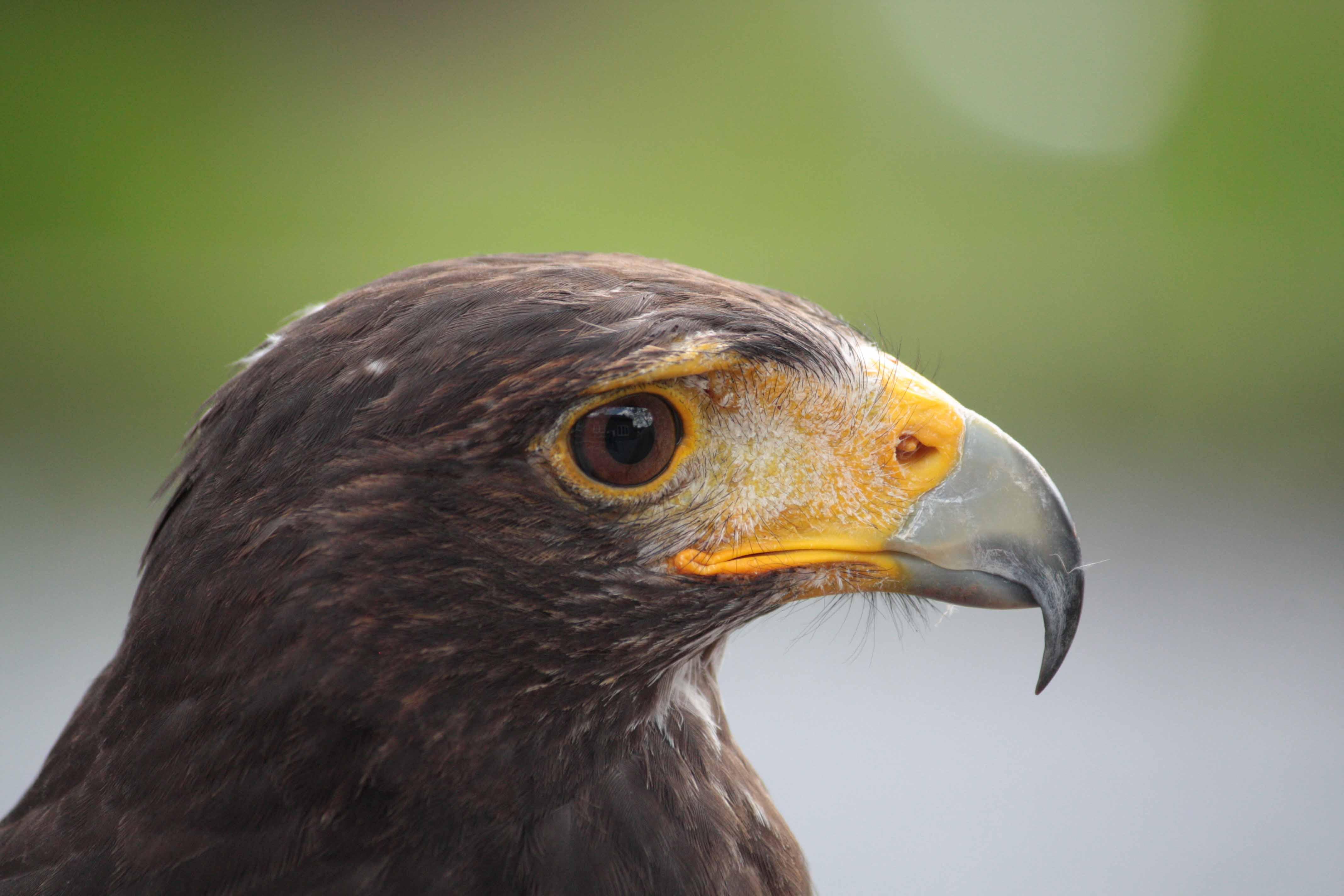
How Tiny Cameras Are Revealing the Hidden World of Flying Hawks
For the first time, researchers have combined miniature head-mounted cameras with detailed 3D environmental maps to reconstruct how freely flying hawks interact with moving targets. The technology could change how scientists study animal behavior outside laboratories.
A bird of prey moves through the air with remarkable precision. It adjusts its head, follows a moving target and changes direction in fractions of a second. Yet observing exactly how these movements relate to the surrounding environment has been surprisingly difficult.
Scientists can track a bird’s general flight path using GPS devices. They can also study animal movement in laboratories equipped with synchronized camera systems. But neither approach easily reveals what a flying bird is looking at, how its head moves relative to nearby objects or how it responds to a target during a fast aerial pursuit.
A study published in Nature Methods on November 3, 2026, introduces a different approach. Researchers fitted Harris’s hawks with a miniature camera system that records an almost complete view of their surroundings. By combining the recordings with a detailed three-dimensional map of the flight area, the team reconstructed the birds’ movements and their interactions with moving targets.
The work offers a new way to investigate animal behavior in natural environments, where movements are not restricted by laboratory walls.
A camera that travels with the bird
The research team developed a head-mounted imaging system designed to capture the environment from the bird’s own moving perspective.
The device uses two cameras positioned back-to-back. Together, they provide a near-complete 360-degree view of the surroundings. The camera system also incorporates an inertial measurement unit, which records movement and orientation.
The equipment was designed to be lightweight enough for use during flight. The camera assembly itself weighed approximately six grams, while the complete system used with the hawks, including the recording electronics and backpack, weighed about 40.5 grams.
That represented roughly five percent of the average body mass of the two birds used in the experiments.
The system recorded video at 60 frames per second, while the inertial sensors collected movement data at a higher frequency. This combination allowed researchers to reconstruct the bird’s head position and orientation while it was flying.
The challenge was not simply recording what appeared in the camera footage. Scientists also needed to determine where the bird was in the physical environment and how it was oriented at each moment.
Turning the landscape into a 3D map
To solve this problem, researchers first created a detailed digital model of the outdoor flight area.
They used drone imagery to reconstruct the landscape, identifying visible landmarks such as trees, branches and other fixed features. These landmarks were assigned positions within a three-dimensional coordinate system.
The camera recordings could then be compared with the digital map.
When a tree or another recognizable feature appeared in the bird’s camera footage, the researchers’ software matched it to the corresponding location in the 3D model. By repeating this process across video frames, the team could estimate the bird’s position and head orientation over time.
The outdoor test area covered approximately 11,000 square meters.
This was an important step beyond conventional laboratory tracking. Instead of requiring a large network of fixed cameras around the animal, the new approach allowed researchers to reconstruct movement across an open outdoor environment.
The method also helped connect the bird’s movement with objects around it, including a moving target.
What the hawks revealed during pursuit
The researchers tested the system with two Harris’s hawks, a species known for its hunting abilities and cooperative behavior.
The birds were trained to fly between two perches approximately 30 meters apart. During the experiments, researchers threw a prey-like food target into the air for the hawks to pursue and capture.
The camera system recorded the surrounding environment while the birds flew.
One of the most interesting observations concerned the movement of the hawks’ heads.
As the birds approached the airborne target, they kept it in front of their heads and moved their heads relatively smoothly. After capturing the target, however, their movement patterns changed.
While turning toward the next perch, the hawks began making rapid head movements separated by brief periods of stability.
These rapid movements are known as head saccades.
The difference suggests that the birds’ head movement patterns were not identical throughout the flight. Their movements changed depending on whether they were pursuing a target or moving away after capture.
This provides researchers with a more detailed view of how an animal’s movements relate to the task it is performing.
There is an important limitation, however: the system recorded head direction, not the exact direction of the bird’s eyes. Researchers therefore cannot claim that the camera directly revealed precisely where the hawks were looking.
The team is developing a future version that can also record eye movements.
Why GPS alone cannot tell the whole story
GPS tracking has transformed wildlife research.
Scientists can attach small tracking devices to animals and monitor migration routes, habitat use and movement across large geographical areas. Such information has helped researchers understand where animals travel and how their behavior changes across seasons.
But GPS provides only part of the picture.
Knowing that a hawk moved 30 meters toward a target does not explain how it oriented its head, how it adjusted its position during the approach or how it responded to nearby objects.
The new camera system addresses this gap by combining spatial tracking with environmental observation.
It also offers a different advantage over conventional motion-capture laboratories. Fixed camera networks can provide highly accurate measurements, but their coverage is limited to the areas where cameras are installed and their fields of view overlap.
A freely moving animal in an open landscape cannot always be studied under those conditions.
By carrying its own camera, the animal effectively becomes the moving observation platform.
This approach could be useful in future studies involving other flying animals, provided the equipment can be adapted to their size, movement patterns and physical needs.
Beyond birds of prey
The technology’s significance extends beyond the study of hunting hawks.
Animal behavior is strongly influenced by the environment. A bird navigating through trees, a mammal approaching another animal or a predator following moving prey must constantly process information about surrounding objects.
Researchers often have to simplify these environments to study behavior under controlled conditions. That can make experiments easier to interpret, but it may also remove some of the complexity that shapes behavior in nature.
A mobile camera system could help bridge that gap.
For example, researchers may eventually investigate how animals respond to obstacles during movement, how they coordinate their bodies when approaching targets or how environmental features influence navigation.
The method could also contribute to the development of more detailed models of animal vision and movement.
However, the current study is a demonstration of the technique rather than a broad survey of bird behavior. It involved only two Harris’s hawks and a controlled outdoor flight task. The results should not be generalized to all raptors or all hunting situations.
The technology must also be adapted carefully for each species. Equipment weight, attachment methods, visibility and the animal’s welfare are important considerations whenever sensors are used on wildlife.
A new perspective on animal movement
One of the most valuable aspects of the research is the change in perspective it offers.
Traditional wildlife tracking often tells scientists where an animal has been. The new method adds information about what surrounded it, how it oriented itself and how its movements related to nearby objects.
That distinction matters because behavior is not simply a sequence of coordinates.
A bird’s flight path is shaped by its interaction with the environment. Understanding that interaction requires more than knowing its location at different points in time.
The researchers have demonstrated that miniature cameras and 3D environmental reconstruction can provide a detailed account of those relationships, even during free flight.
The next challenge will be extending the approach to longer observations, more complex natural behaviors and additional species.
For now, the work offers an unusual window into the mechanics of aerial pursuit. It shows how a small camera, carried by a bird in flight, can help scientists reconstruct movements that would otherwise be extremely difficult to observe.
The technology does not give researchers the hawk’s complete visual experience. But it brings them closer to understanding how an animal moves through the world it sees.
Sources and Further Reading
- Voit, K.-M. et al. (2026). “Head-mounted camera for reconstructing outdoor behavior in freely flying birds.” Nature Methods. Published November 3, 2026. https://doi.org/10.1038/s41592-026-03281-w
- Max Planck Institute for Neurobiology of Behavior – caesar. “Reconstructing a predator bird’s aerial pursuit-behavior in the wild.” November 2, 2026. Research announcement.
Research note: The study used two Harris’s hawks and a controlled outdoor target-capture task. The camera system reconstructed head position and orientation, not exact eye gaze. Its findings demonstrate a research method rather than a universal explanation of raptor hunting behavior.